
Outdoor Dining Gets a Makeover
In a world where public spaces and private backyards increasingly compete for attention, furniture that delights as much as it performs offers an obvious advantage. Fruit shaped picnic tables are exactly that kind of design device: functional, durable picnic tables that double as playful sculptures and visual anchors. They transform ordinary eating or gathering zones into Instagram-ready destinations, invite children to linger and play, and give businesses and communities an imaginative talking point. Whether it’s a watermelon-slice table at a community market, a pineapple-shaped table outside a tropical café, or a cluster of apple-table seating in a schoolyard reading garden, fruit shaped picnic tables signal something simple and powerful—food, fellowship, and fun.
This article goes deep on why fruit shaped picnic tables are the perfect and unique choice for parks, schools, restaurants, resorts, event planners, and homeowners who want to combine utility with personality. We’ll cover the design logic (why fruit works as form), the practical engineering and materials that make these tables safe and durable outdoors, options for different fruit motifs, ADA and accessibility considerations, maintenance and longevity, sustainability and sourcing, cost and procurement guidance, DIY vs. commercial production, case studies and use cases, and answers to common buying questions. If you’re evaluating options for adding character and utility to a space, read on—this is a comprehensive guide to making fruit-inspired gathering furniture sing.
The Meaning Behind the Form: Why Fruit Works as a Picnic Table Motif
Fruit is universal. It carries cultural associations—nourishment, abundance, health, celebration—that resonate across ages and cultures. Translating fruit into picnic-table form is not only whimsical; it is semiotic. A strawberry-shaped table in a public garden visually connects the space to food and nature; a lemon-shaped table outside a café hints at freshness and zest. The rounded shapes of many fruits also match ergonomic seating patterns—curves invite closeness, encourage circular conversation, and support multi-directional seating.
Fruit motifs appeal strongly to children, helping playgrounds and schools foster curiosity and connection to healthy eating. For businesses, fruit shaped picnic tables create photo opportunities and brand associations (think “our smoothies are so good we built a bench shaped like a pineapple”). For designers, fruit shapes provide a friendly contrast to rectilinear architectural elements, softening plazas and adding a human scale to larger landscapes. In short, fruit shaped picnic tables are meaningful because they communicate purpose through form while offering the practical advantages of communal seating.
Design Typologies: From Literal to Interpretive Fruit Tables
Fruit shaped picnic tables span a spectrum from literal sculptural recreations to interpretive abstractions. Common typologies include:
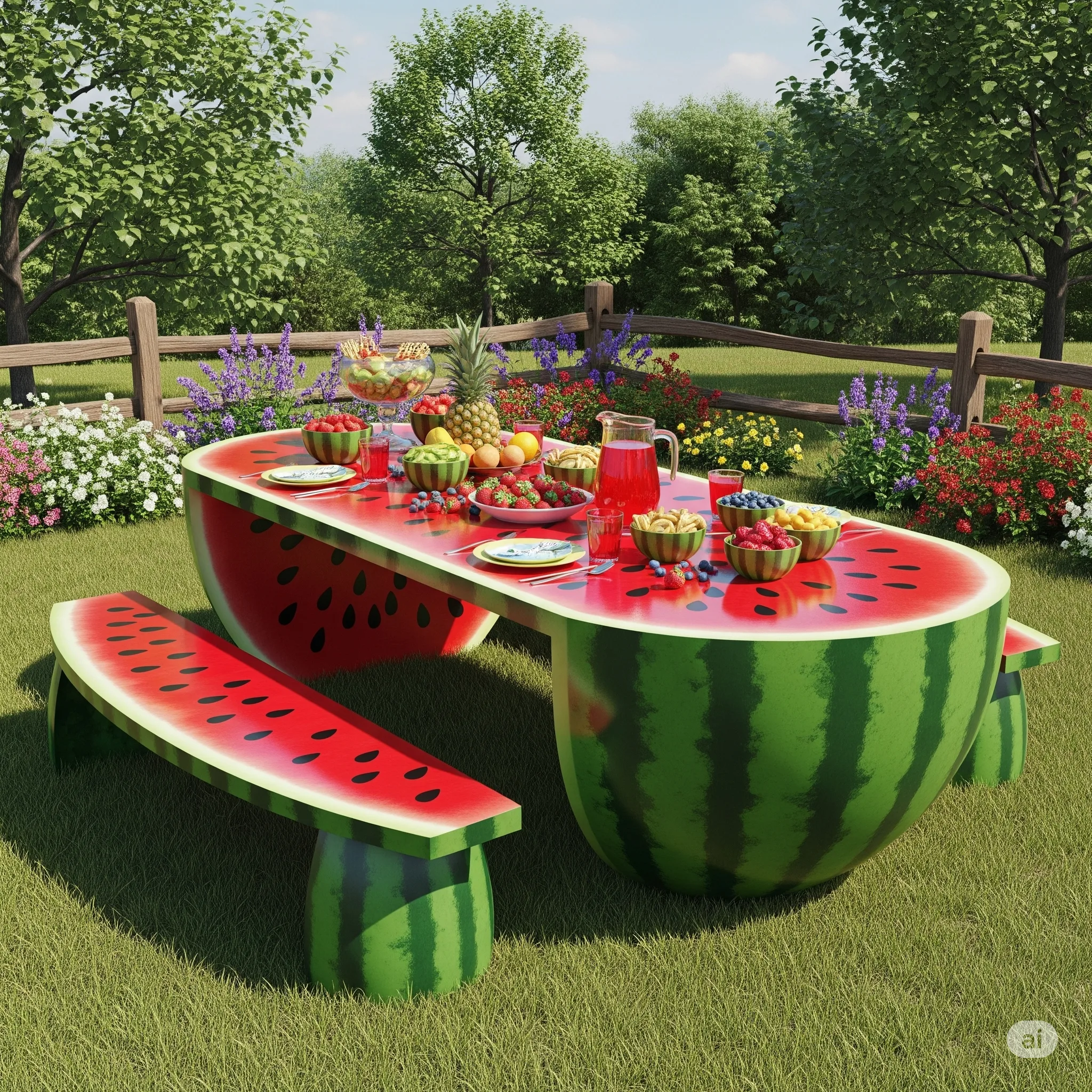
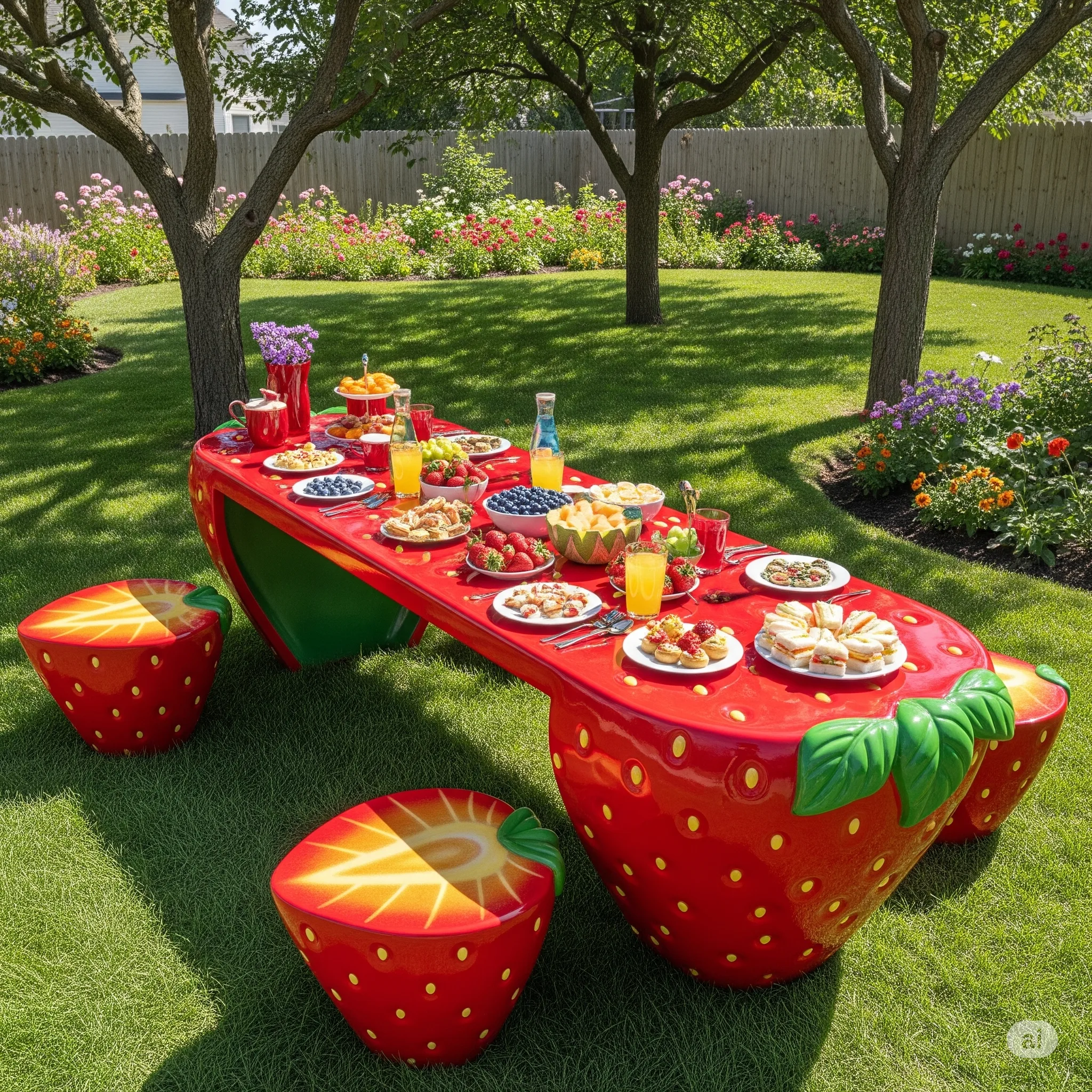
- Literal Fruit Tables: Realistic carved or molded tops with painted or textured surfaces that mimic rind, seeds, or skin details (e.g., watermelon slice with seeds, pineapple with textured skin). These are highly themed and work well in resorts, themed parks, or children’s museums.
- Stylized/Geometric Fruit Tables: Simplified fruit outlines—rounded lemon shapes, wedge thumbs for grapefruit—executed as planar tabletops with color accents. These fit contemporary plazas and modern cafés that want a playful touch without overcommitment to kitsch.
- Clustered Fruit Sets: Multiple small fruit tables arranged as a “fruit salad,” ideal for outdoor dining areas where flexible seating is required.
- Integrated Bench & Table Sculptures: Long benches where seatbacks take a fruit form (banana curves, apple-back silhouettes) and tabletops integrate storage or planter pockets—good for community gardens.
- Hybrid Play-Furniture Tables: Fruit tables that double as low play structures for children: shallow steps around a pear table, low platforms embedded in an orange slice table for brief climbing. These serve dual roles in parks.
- Commercial-Grade Rotating Units: Tables with umbrella integration, drink rails, or lighting to support hospitality uses—pineapple tables with central parasol options are popular.
Each typology carries different engineering needs—literal sculptures demand complex forms and durable surface finishes, while stylized tables can be simpler to produce and more cost-effective.
Fruit Choices and Symbolism: Which Fruit Fits Your Space?
Choosing the fruit motif affects atmosphere and messaging:
- Watermelon: Summery, communal. Large watermelon-slice tables invite group dining and are iconic at festivals and family parks.
- Pineapple: Hospitality symbol; great for resort lobbies, poolside bars, and tropical cafés.
- Apple: Schoolyard or community garden fit—evokes learning, orchards, and wholesome eating.
- Strawberry: Friendly and intimate—perfect for playgrounds and boutique cafés.
- Orange/Grapefruit/Lemon: Citrus shapes deliver bright color and energy—ideal for juice bars and vibrant public spaces.
- Banana: Informal and playful, but watch for visual humor if the site needs elegance.
- Grapes (cluster): Create modular seating where smaller round tables are grouped together; stylish in markets.
- Kiwi or Exotic Fruits: Niche choices for specialty venues or botanical gardens.
Think about scale and cultural associations when picking a fruit—watermelon may be perfect for a summer festival but might feel out of place in a minimal urban plaza.
Materials: What Makes a Fruit Shaped Picnic Table Durable and Safe
Durability and safety are non-negotiable for outdoor furniture. Common materials and their pros/cons:
Solid Timber & Engineered Wood
- Pros: Warm, tactile, repairable, can be sustainably sourced (FSC-certified). Makes for beautiful, high-quality finishes and is easily carved for sculptural detail.
- Cons: Requires weatherproofing, periodic maintenance (sealing/oiling), vulnerable to UV in harsh climates unless finished properly.
- Best for: Park installations in mild climates, premium resort settings, or interior installations.
Recycled HDPE (High-Density Polyethylene)
- Pros: Extremely durable, low-maintenance, resistant to rot, and available in vibrant colors. Recycled HDPE is a sustainable choice that resists graffiti and staining.
- Cons: Can feel plastic; thermal expansion must be considered in large pieces.
- Best for: Public playgrounds, parks, and high-use commercial settings.
Powder-Coated Steel & Aluminum Frames
- Pros: Structural strength, long life, can be formed into complex profiles, powder coatings protect against rust and UV.
- Cons: Heavier (steel) or more costly (aluminum); metal surfaces can heat up in direct sun—consider integrated shading.
- Best for: Urban plazas, heavy-duty anchoring, and commercial applications.
Fiberglass & Composite Shells
- Pros: Ideal for sculptural, smooth, realistic fruit shapes; lightweight and capable of high detail; gelcoat finishes can be UV-stable.
- Cons: Manufacturing requires molds; not always environmentally friendly; repairs need specialist work.
- Best for: Themed parks, resorts, and sites where visual impact is primary.
Concrete & Stone (Textured)
- Pros: Extremely durable, vandal-resistant, can be colored and textured to resemble fruit; high thermal mass.
- Cons: Heavy, expensive to install, and less forgiving in playground contexts.
- Best for: Permanent public art or plazas where permanence is valued.
Mixed-Material Assemblies
Often the best approach is hybrid: a structural steel frame, HDPE or timber seating surfaces, and a fiberglass fruit top for realistic texture. Choose materials based on climate, expected use, sustainability goals, and budget.
Manufacturing & Fabrication Processes
How fruit shaped picnic tables are made varies:
- CNC Carving (Wood): CNC routers cut precise forms from timber or laminated blocks—excellent for custom apple/pear silhouettes with carved details.
- Rotational Molding (Plastics): Used for large hollow fiberglass or polyethylene forms—good for lightweight, weatherproof fruit shells.
- Vacuum Forming (Thermoformed Plastics): Economical for medium-detail shells, ideal for batch production.
- Hand Lamination & Gelcoat (Fiberglass): Offers high fidelity and finish quality for sculptures; often used where a glossy, colorful appearance is desired.
- Metal Fabrication & Powder Coating: Frames are bent and welded, then powder-coated in durable finishes; metal is used for legs, internal frames, and attachment points.
- Composite Assembly: Combines structural frames with surface cladding and integrated hardware (umbrella mounts, cup holders, anchor points).
Selecting a manufacturer with experience in outdoor furniture ensures that joints, fixings, and finishes withstand real-world conditions.
Structural Engineering: Stability, Anchoring, and Safety
Fruit shaped picnic tables must be both beautiful and safe. Key structural considerations:
- Center of gravity and tipping: Curved surfaces can shift weight distribution. Ensure a sufficiently wide base and properly located legs or pedestals.
- Anchoring options: Surface mounts to concrete pads (anchor bolts), in-ground concrete footings, or removable ground sleeves allow for permanence or temporary installations.
- Load capacity: Design seating and tabletop areas for expected loads—standard public seating should withstand concentrated loads of 300–400 lbs per seat area, and the entire structure must resist dynamic loads when kids jump or climb.
- Weather loads: Consider wind uplift if the table includes umbrella mounts or tall sculptural parts. Use through-bolts and locking nuts for security.
- Rounded edges & radii: Use generous radii to avoid sharp corners—this is especially important where children play.
- Anti-vandal hardware: Tamper-proof fasteners and welded joints limit misuse and theft.
A structural review, even for simple fruit tables, prevents failures and liability issues.
Accessibility & ADA Compliance
Public furniture must be inclusive. ADA (or local accessibility standards) considerations include:
- Knee & toe clearances: Ensure that at least one seating station per table allows wheelchair users to roll under the table (typically 27 inches of knee clearance and 30 inches of width at seating positions).
- Table height: Accessible tables usually have tops at 28–34 inches high with suitable clear space.
- Surface transitions: Smooth, level access from pathways to table areas avoids trip hazards and supports wheeled mobility.
- Seating options: Fixed benches may hinder accessibility; consider integrated removable seating or spaces without benches.
- Color contrast & tactile cues: For visually impaired users, color contrast and tactile changes help identify seating and edges.
Design fruit shaped picnic tables with at least one universally accessible configuration—this is both legally and ethically necessary in public spaces.
Surface Treatments & Weatherproofing
To remain vibrant and safe outdoors, fruit shaped picnic tables require appropriate surface systems:
- UV-resistant pigments: Avoid colors that fade; choose pigments and gelcoats rated for long-term UV exposure.
- Anti-slip finishes: For seats and tabletop edges, choose textured finishes or incorporate anti-slip strips to limit slips when surfaces are wet.
- Graffiti-resistant coatings: Especially in urban settings, these coatings allow quick removal of spray paint and markers.
- Seals and joints: Use marine-grade sealants in wood assemblies and appropriate gasketing for composite joins.
- Drainage design: Tables shaped like fruit must include subtle drainage channels or slight camber to prevent pooling water that invites mildew.
Proper finishing extends life and reduces maintenance costs.
Maintenance & Longevity: Care Strategies for Different Materials
Maintenance responsibilities depend on material:
- Wood: Periodic sealing, sanding of splinters, and re-staining. Inspect for rot and replace parts as needed.
- Recycled HDPE & plastics: Low maintenance—wash with mild detergent; watch for differential fading over years.
- Fiberglass & gelcoat: Clean mildew with gentle cleaners; polish to restore sheen; repair cracks with patch kits.
- Powder-coated metal: Touch-up chips promptly to prevent corrosion; inspect welds and fasteners.
- Concrete: Pressure washing removes grime; reseal every few years to prevent water ingress.
Establish a maintenance plan with the selected supplier—annual inspections and an accessible spare-parts plan reduce downtime.
Safety & Liability: Policies and Best Practices
Facilities deploying fruit shaped picnic tables should adopt safety practices:
- User signage: Indicate intended use (e.g., “seating only”) and weight limits where applicable.
- Regular inspection logs: Record inspections and repairs—useful for risk management.
- Soft landscaping beneath play-friendly tables: If children will climb, use impact-absorbing surfacing such as engineered wood fiber.
- Insurance notification: Notify insurers of new assets to confirm coverage parameters.
- Vandalism & theft prevention: Consider CCTV or community-ownership strategies in public spaces.
Mitigating risk keeps spaces welcoming and operators protected.
Cost Considerations: Budgeting for Fruit Shaped Picnic Tables
Costs vary widely by design and material:
- Basic HDPE stylized table: $800–$2,000 per unit (mass-produced, simple forms).
- Mid-range timber/metal hybrid: $2,500–$7,000 (custom CNC carpentry, engineered frames).
- High-end fiberglass sculptural table: $7,000–$25,000+ (large, realistic forms, specialty finishes, custom molds).
- Installation & anchoring: Site prep, concrete pads, and installation can add $500–$5,000 depending on conditions.
- Maintenance & replacement parts: Budget for annual maintenance—$100–$500 per year depending on material and exposure.
Consider lifecycle cost, not just upfront price—low-maintenance recycled plastics can be more cost-effective over 10–20 years than premium timber that requires regular refinishing.
Procurement: Where to Source and How to Commission
Options include:
- Specialty outdoor furniture vendors: Provide durable, tested products with warranties.
- Theme and set fabricators: Create high-fidelity sculptural pieces for resorts or parks.
- Local metal and wood fabricators: For bespoke, community-led projects—great for local economic development.
- Mass-market playground suppliers: Offer standardized pieces that meet safety certifications.
When commissioning, request material specs, warranty terms, UV and weather testing evidence, installation instructions, and maintenance training. A visit to a similar installation or supplier references helps validate performance claims.
DIY vs. Professional Production: Pros, Cons, and Considerations
DIY can be rewarding for community gardens or smaller budgets:
- DIY Pros: Lower material cost, community engagement, customization.
- DIY Cons: Lack of professional testing, potentially lower durability, liability risks.
Professional fabrication is recommended for heavy public use or large sculptural pieces because of the engineering complexity and safety demands. If you pursue DIY, collaborate with an experienced fabricator for critical elements (anchoring, coatings) and ensure compliance with local codes.
Use Cases and Placement Ideas
Fruit shaped picnic tables work in many contexts:
- Parks & playgrounds: Create themed zones for family gatherings and easy supervision.
- Schools & childcare centers: Engage kids with food literacy and provide durable outdoor classroom furniture.
- Farmers’ markets: Reinforce signage and supply seating near vendors.
- Cafés & juice bars: Extend brand into the landscape; integrate umbrella mounts for shade.
- Resorts & pool decks: Create memorable signature spaces.
- Community gardens: Provide passive seating and tie design to local growing themes.
- Event spaces & festivals: Portable versions support pop-ups and create photo opportunities.
Placement should consider sun exposure, pedestrian flow, accessibility, and sightlines for supervision in child-focused settings.
Marketing & Brand Opportunities for Businesses
For hospitality and retail, fruit shaped picnic tables are a marketing tool:
- Social media magnet: Unique visuals encourage user-generated content and shares.
- Brand alignment: A cafe selling citrus drinks can strengthen messaging with citrus-shaped seating.
- Events and activations: Tables can be temporary branded assets for campaigns.
- Wayfinding & placemaking: Fruit motifs help visitors intuitively find food areas.
Pair tables with strategic signage, lighting for evening use, and consistent color palettes to reinforce brand identity.
Case Studies & Examples (Illustrative)
- A seaside market installed watermelon wedge tables: Weekend footfall rose as families lingered to picnic; vendors reported increased per-person spend.
- A botanical garden commissioned pear-shaped tables in an orchard clearing: The tables complemented interpretive signage on fruit trees, creating an integrated learning and rest zone.
- A downtown café used orange-slice tables with custom vinyl wraps: The visual play attracted press coverage and a noticeable uptick in lunchtime customers.
These examples show how fruit shaped picnic tables create both place and purpose.
Buying Checklist: What to Ask Before You Commit
- What is the expected daily use and user profile?
- What materials and warranties does the supplier offer?
- Is the table ADA-compliant (or can it be configured to be)?
- What anchoring and installation are required?
- Are finishes UV- and graffiti-resistant?
- What is the maintenance schedule and cost?
- Can the design be adapted for umbrellas, lighting, or planters?
- Are replacement parts available locally?
- Has the design been tested for load and safety?
- Can you see a finished example or supplier references?
This checklist reduces surprises after installation.
Frequently Asked Questions (FAQ)
Q: Are fruit shaped picnic tables safe for children to climb on?
A: It depends on the design; tables intended as play elements should follow playground safety standards and have appropriate impact surfacing. Always verify intended use.
Q: How long do painted or colored finishes last outdoors?
A: With UV-resistant pigments and quality coatings, expect several years of good appearance; periodic touch-ups may be necessary in harsh sun.
Q: Can fruit tables be moved seasonally?
A: Smaller HDPE or aluminum models can be moved; larger concrete or anchored installations require removal equipment.
Q: Do they attract pests?
A: Not inherently—solid synthetic or sealed wood surfaces don’t attract insects. Avoid storing food residue on the table to prevent pests.
Q: What are typical lead times for custom tables?
A: For custom mold or CNC work expect 6–12 weeks; stock items may ship faster.
Conclusion
Fruit shaped picnic tables are the perfect and unique choice when you want seating that performs and delights: they are gathering furniture that communicates purpose, supports social interaction, and creates memorable places. Carefully executed fruit tables balance whimsical form with thoughtful engineering—durable materials, weatherproof finishes, secure anchoring, and accessible designs. They invite children to play, encourage adults to linger, and give businesses and communities a signature element that enhances brand and place.
Choosing the right fruit shaped picnic tables requires aligning motif with context (is the site playful or refined?), selecting materials that match exposure and maintenance capacity, and considering accessibility and safety as central design drivers. Whether you commission a sculptural watermelon wedge for a summer festival, specify durable HDPE orange tables for a schoolyard, or order a cluster of pineapple tables for a resort terrace, these pieces reward thoughtful investment with long-term value: places where people eat, talk, play, and make memories.