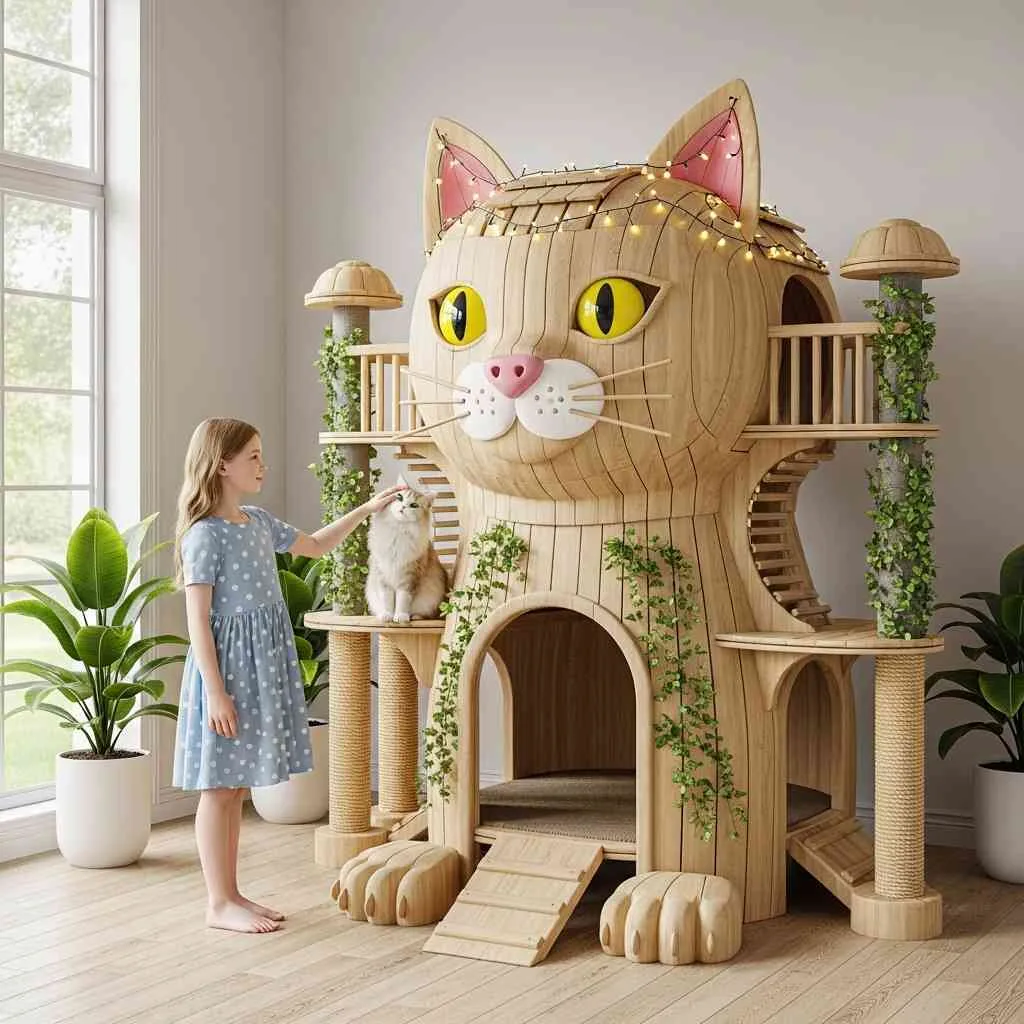
“Cat Playgrounds” — two simple words that capture a fresh movement in pet care and interior design. No longer relegated to the corner of a cluttered room or a rickety scratching post, modern cat playgrounds are thoughtfully engineered spaces that satisfy a cat’s instincts while elevating the look and feel of your home. They blend climbing, scratching, hiding, leaping, and lounging into curated environments where both form and function co-exist.
This article explores Cat Playgrounds in depth: what they are, why every cat (and their human) benefits from one, how to design or choose a playground that fits your space and aesthetics, practical safety and maintenance tips, budget-friendly and premium options, and creative ideas to inspire your next project. Whether you’re an apartment dweller with one curious kitten or a homeowner managing several mature cats, a well-designed Cat Playground can transform everyday life — reducing stress for your cats, minimizing unwanted behavior, and adding a unique decorative element to your living space.
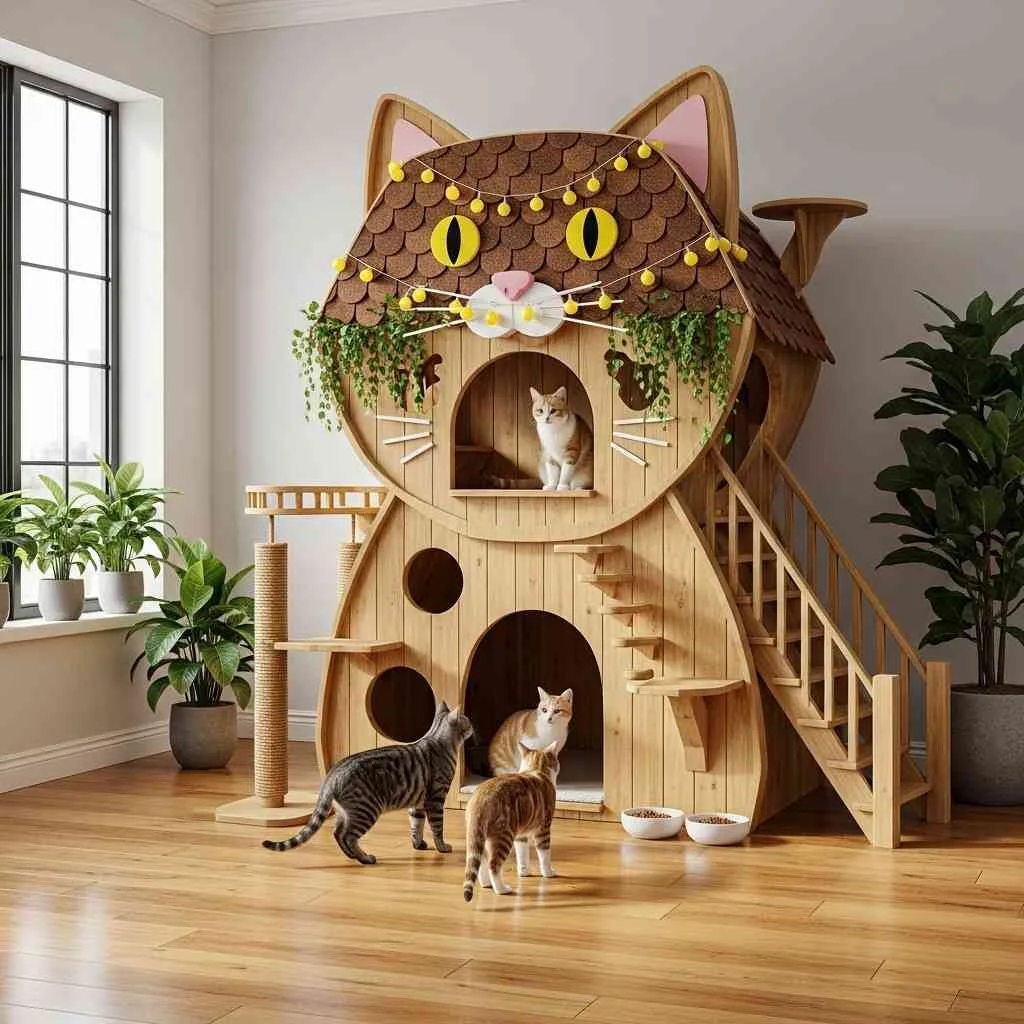
Why Cat Playgrounds Matter: The Feline Perspective
Cats are hunters, climbers, and territorial explorers — even indoor cats. Their bodies and brains are wired for verticality, motion, scent marking, and occasional bouts of high-energy play. When these instincts aren’t satisfied, cats can become bored, stressed, or destructive: scratching furniture, excessive vocalization, over-grooming, or simply withdrawing.
Cat Playgrounds are designed to meet those instinctual needs. They provide:
- Vertical territory — shelves, towers, and perches let cats survey their environment from safe, elevated vantage points.
- Physical outlets — climbing, hopping, and leaping keep muscles toned and joints healthy.
- Mental stimulation — puzzle feeders, interactive toys, and complex layouts engage curiosity.
- Safe retreats — hiding spots reduce stress when cats need solitude.
- Social spaces — multi-level playgrounds provide enough resources for several cats to coexist without conflict.
A properly conceived Cat Playground replicates the patchwork of challenges and comforts a cat would encounter outdoors — but in a controlled, safe, and often spectacularly stylish way.
Core Design Principles for Stylish, Functional Cat Playgrounds
When designing or choosing a Cat Playground, keep four core principles in mind: safety, ergonomics, enrichment, and aesthetics.
Safety First
Materials should be non-toxic, edges rounded, and structures securely anchored. Consider weight load for shelves and hammocks; use hardware anchors for drywall or choose freestanding units for rental spaces. Avoid small parts that could be chewed or swallowed.
Ergonomics for Cats
Cats prefer routes that flow: climb to perch, leap down to scratch, slip into a cubby to nap. Steps and ledges should accommodate a cat’s natural stride. For kittens or senior cats, incorporate ramps or lower steps to ease mobility.
Enrichment Built In
A playground is more than platforms. Incorporate scratching surfaces (sisal, corrugated cardboard), sensory toys (feather wands, bells), puzzle feeders, and rotating elements to prevent habituation.
Aesthetics That Complement Your Home
Think of Cat Playgrounds as furniture or art installations. Use materials and colors that match your decor — wood finishes, sleek metal frames, plush fabrics, or minimalist floating shelves. Clever design choices let the playground be both a pet amenity and a tasteful design statement.
Types of Cat Playgrounds: Which One Fits Your Home?
There’s no one-size-fits-all Cat Playground. Below are the most popular types and who they’re best for.
1. Wall-Mounted Vertical Systems
Perfect for small spaces and apartment living. These use vertical wall real estate to provide shelves, ramps, and perches. They’re visually sleek and keep floor space free.
Best for: Singles or couples in apartments; cats who love height.
2. Multi-Level Cat Trees & Condos
Classic and versatile, cat trees give a mix of perches, tunnels, and scratching posts. Modern designs can be surprisingly elegant when made with natural wood and neutral upholstery.
Best for: Multi-cat households; homes with vertical and horizontal play needs.
3. Window Perches & Loungers
Cats love sun and people-watching. Window-mounted hammocks and wide ledges are low-cost ways to give a cat a dedicated observation post.
Best for: Sun-loving cats; anyone who wants a simple upgrade.
4. Modular Systems
Customizable modules let you assemble playgrounds to fit odd spaces. Modules can include condos, ramps, scratching panels, and detachable toys.
Best for: Owners who want flexibility and growth over time.
5. Catios (Outdoor Cat Enclosures)
For those with outdoor access, a catio offers safe outdoor enrichment: birds, fresh air, and stimulation without roaming risks. Designs range from balcony add-ons to fully built backyard enclosures.
Best for: Cats with supervised outdoor curiosity; homes with safe outdoor space.
6. Integrated Furniture (Built-ins & Hidden Play)
Think bench seating with scratchboard panels, shelves that double as perches, or coffee tables with cat tunnels. These integrate feline needs into everyday furniture.
Best for: Design-conscious owners who want seamless integration.
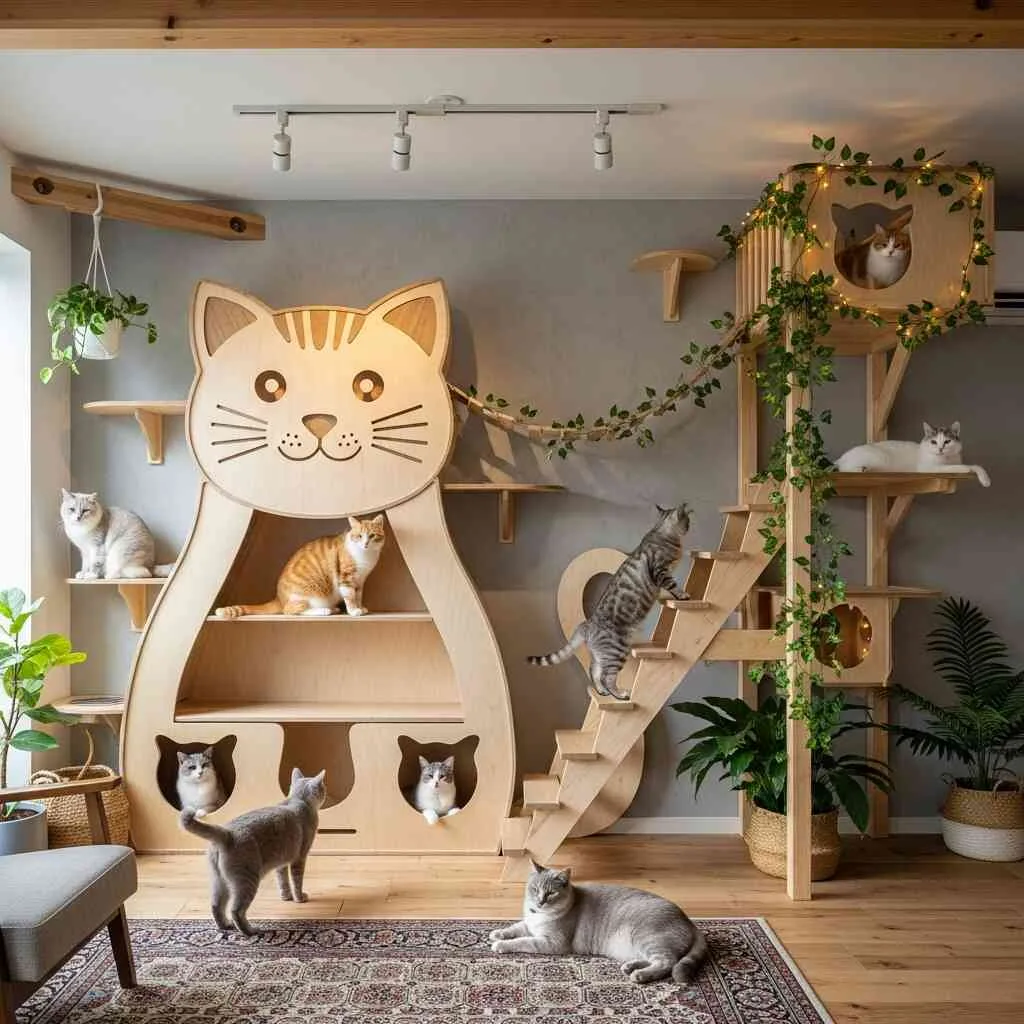
Materials & Finishes: Practicality Meets Style
Selecting materials affects safety, durability, and visual appeal.
- Wood: Sturdy and warm. Use solid wood or high-quality plywood with rounded edges for shelf systems. Finish with pet-safe, low-VOC sealants.
- Sisal Rope & Panels: Ideal for scratching surfaces. Sisal’s natural texture is satisfying for cats and durable.
- Cardboard: Cheap and beloved; corrugated cardboard scratchers are excellent for rotation and replacement.
- Upholstery & Fabric: Choose durable, cleanable fabrics. Microfiber or performance velvet resists snagging and can look luxe.
- Metal & Acrylic: Offer modern looks. Metal frames are strong; acrylic panels can create sleek perches but may show scratches over time.
- Hardware & Anchors: Stainless or galvanized hardware resists rust, especially for outdoor or humid locations.
Always check finishes for low VOCs and avoid toxic glues or paints. If you’re unsure, opt for untreated natural materials and washable fabrics.
Planning Your Cat Playground: Step-by-Step Guide
A thoughtful plan makes installation smooth and ensures your cats will use the space.
Step 1: Observe Your Cat(s)
Do they love high places? Prefer ground-level naps? Are they shy or sociable? Note favorite windows, lone nap spots, and typical play patterns.
Step 2: Measure Your Space
Record wall lengths, window heights, and floor clearances. Consider where sunlight falls during the day.
Step 3: Choose a Type & Layout
Decide between wall-mounted, freestanding, or a hybrid. Sketch a basic flow: entry route, climbing path, play zone, and resting spots.
Step 4: Select Materials & Colors
Match the playground to your decor while prioritizing durability where cats will scratch or jump.
Step 5: Install Securely
Use anchors rated for expected loads. For tall freestanding units, consider wall-bolting for safety. Test every shelf and perch thoroughly.
Step 6: Introduce Gradually
Place treats, toys, and catnip to encourage exploration. Avoid forcing a cat into a new spot — let curiosity lead.
Safety & Maintenance: Keeping Playgrounds Healthy and Long-Lived
Design and upkeep both matter for longevity and safety.
Anchoring & Stability
Any tall or elevated element must be anchored to prevent tipping. Use wall studs when possible and heavy-duty anchors for drywall.
Inspect Regularly
Check for loose screws, frayed rope, or torn fabric. Replace worn scratching surfaces and ensure perches remain level.
Cleanability
Choose fabrics and materials that are washable or easily wiped down. Vacuum or lint-roll soft surfaces regularly to reduce allergens.
Avoid Small & Loose Parts
Eliminate or secure anything your cat could swallow. Replace toys with missing pieces.
Pet-Safe Treatments
Treat woods and fabrics with pet-safe finishes and cleaners. Avoid essential oil diffusers that use tea tree, eucalyptus, or citrus oils — these can be toxic to cats.
Enrichment Features That Make Playgrounds Thrilling
Make a Cat Playground irresistible with layered enrichment:
- Puzzle Feeders: Encourage foraging behavior. Hide treats in platforms or attach penny-sized treat holes.
- Rotating Toys: Move toys between levels to renew interest.
- Scent Stations: Rotate in catnip, silvervine, or pheromone diffusers (consult a vet first).
- Hiding Cubbyholes: Small enclosed spaces give security and reduce stress.
- Moving Elements: Dangling ropes, swinging hammocks, or detachable toys offer kinetic fun.
- Observation Points: High perches and window perches let cats watch birds and neighborhood activity safely.
A mix of predictable and novel elements keeps cats mentally sharp and physically active.
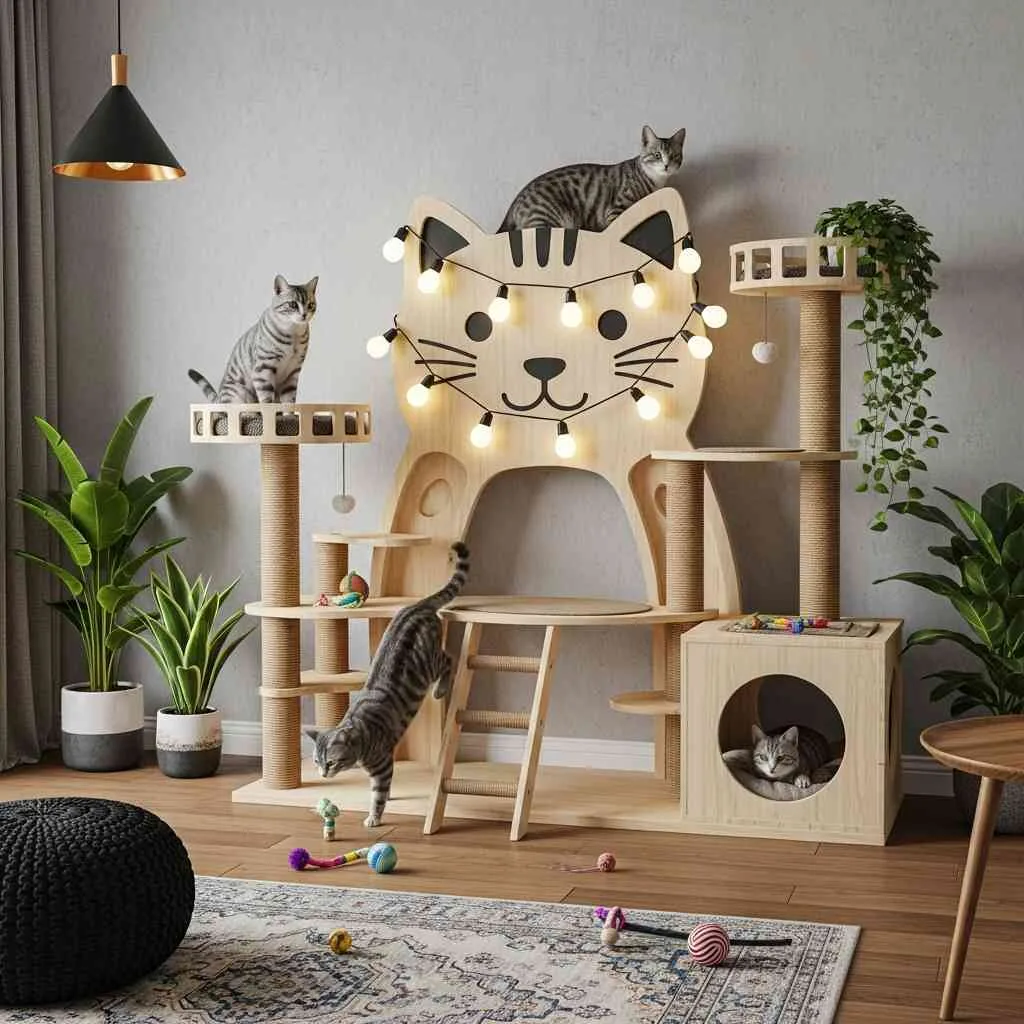
Integrating Cat Playgrounds into Home Decor
A stylish Cat Playground can enhance your room rather than clash with it.
Match Scale & Proportion
Choose shelf widths and heights that visually fit your wall. Large wall systems work with tall ceilings; discreet perches fit shallow spaces.
Coordinate Materials
If you have mid-century wood furniture, choose walnut-finished shelves. For minimalist interiors, consider white floating perches with hidden brackets.
Use Color as an Accent
Pick two complementary colors for cushions or panels and repeat them in nearby accessories like throws or vases to tie the playground into the room.
Concealment & Multipurpose Design
Opt for pieces that double as storage or seating — a bench with hidden litter storage, or a bookshelf with integrated perches.
Let It Be a Statement Piece
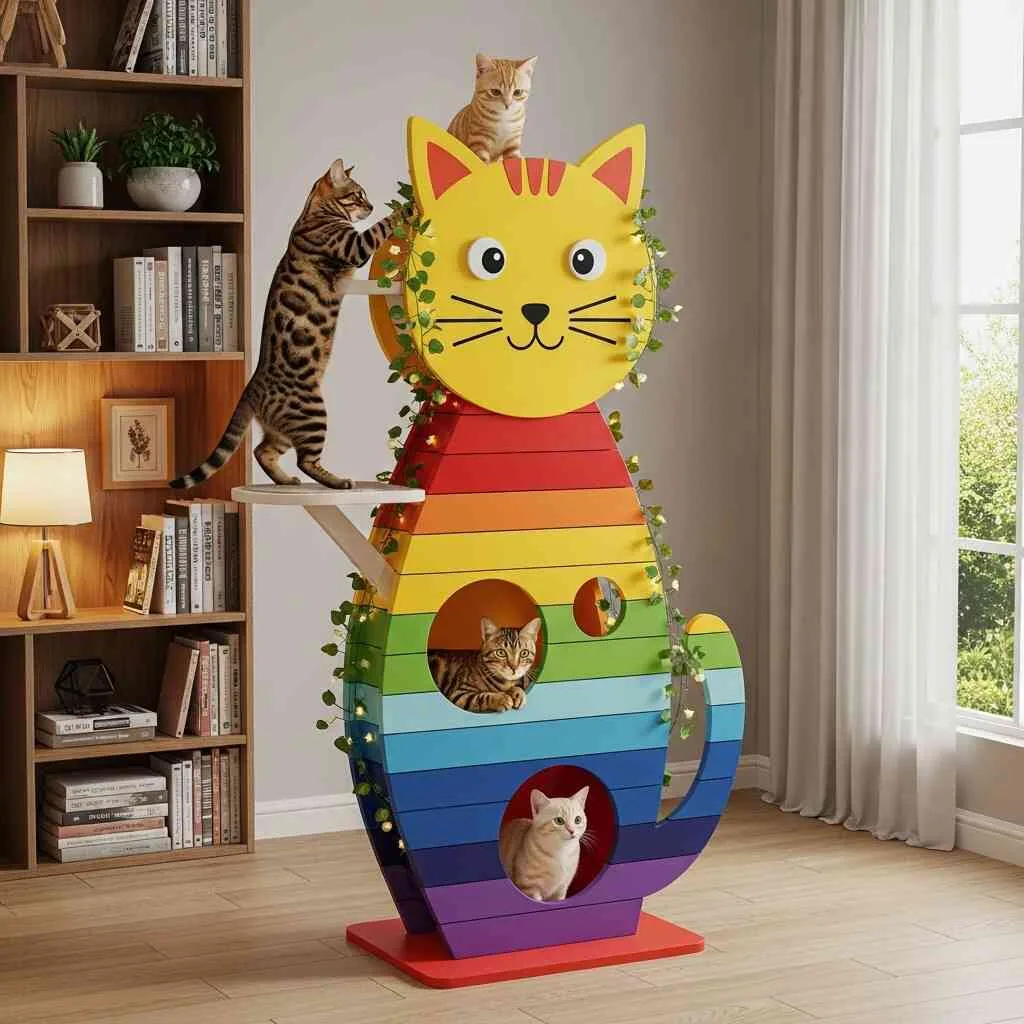
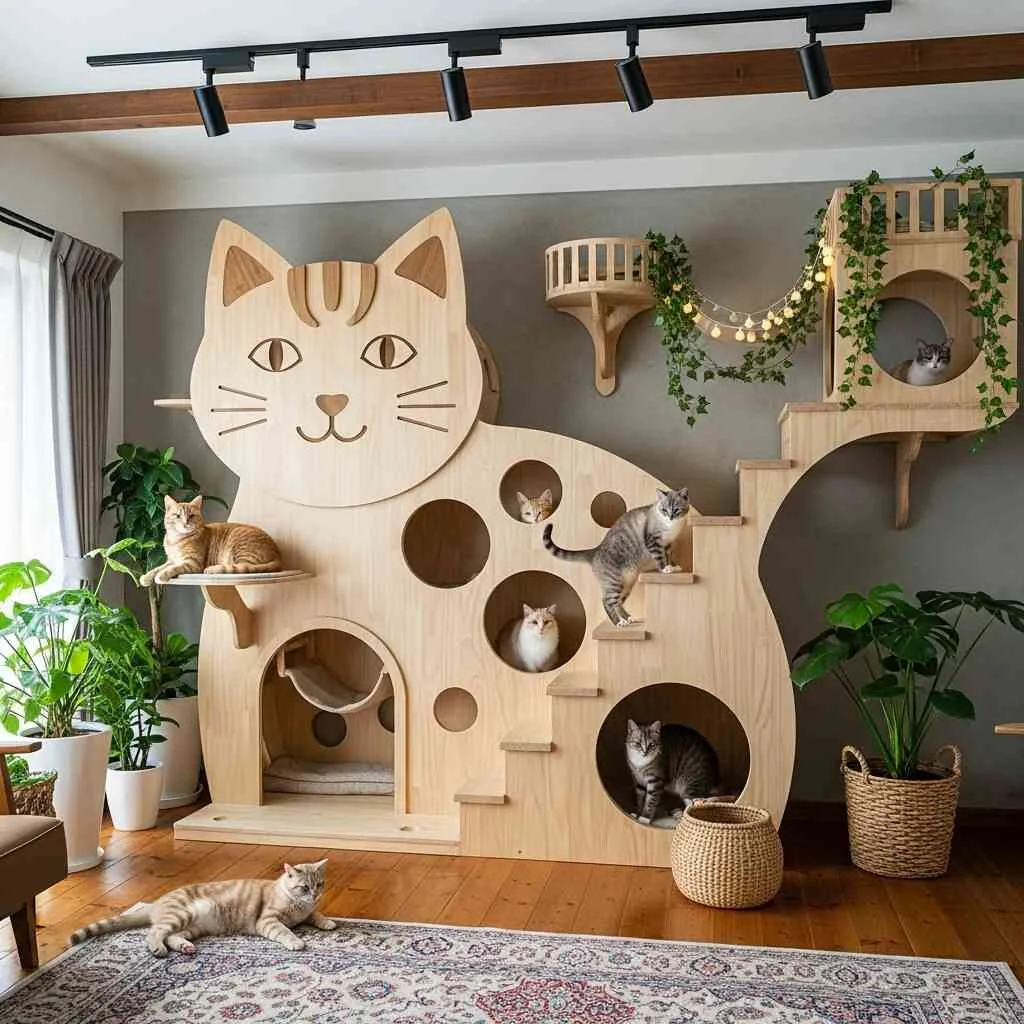
A beautifully designed cat tree or a sculptural wall installation can serve as functional art. Think of it as a conversation starter, not just pet furniture.
DIY Cat Playground Projects (Budget-Friendly & Creative)
You don’t need to be a master carpenter to create a delightful Cat Playground. Here are approachable projects:
Floating Shelf Perch Wall
Use staggered shelves to create a climb path. Add sisal-wrapped edges for scratching and small cushions for naps.
Repurposed Bookshelf Cat Tree
Remove a few shelves, add carpeted platforms, and cut entry holes for cubbies. Anchoring is essential.
PVC Pipe Climber for Kittens
Lightweight and inexpensive — assemble PVC frames with fabric hammocks and dangling toys. Not suitable for large, heavy cats.
Window Hammock
Metal brackets and canvas form an inexpensive hammock that attaches beneath a window. Perfect for sun-lovers.
Cardboard Play Maze
Stack sturdy cardboard boxes with entry holes and tunnels. Rotate or replace often — it’s cheap and cats love the texture.
DIY projects let you customize size, color, and layout while keeping costs low.
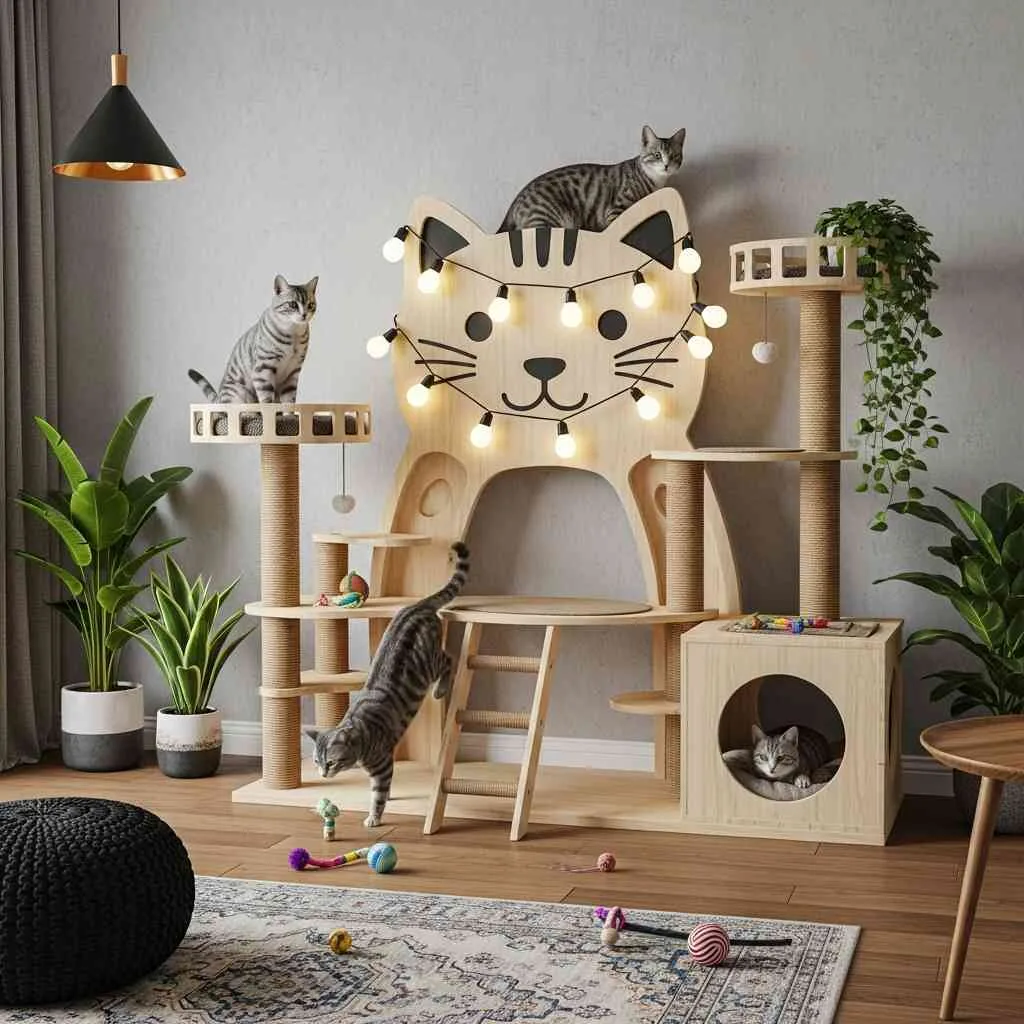
Cat Playgrounds for Specific Needs
Different cats have different needs — tailor your playground accordingly.
For Kittens
Provide low platforms and gentle ramps. Avoid high drops and use softer fabrics. Rotate toys frequently to develop motor skills.
For Senior Cats
Lower perches, ramps instead of jumps, and extra padding help arthritic or less-mobile cats remain active safely.
For High-Energy Cats
Include tall towers, long runways, and vertical jump points. Add interactive wand toys and puzzle feeders.
For Multi-Cat Households
Offer duplicate resources — multiple scratching posts, perches, and feeding stations — to reduce competition. Design distinct “territories” within the playground.
Case Studies: Realistic Setups That Work
City Studio: Vertical Elegance
Maya lives in a 40m² studio with two adolescent cats. The solution: a vertical wall system with staggered shelves, a window perch, and an artistic tall cat tree that doubles as a room divider. Result: happier cats, less couch-scratching, and a living room that looks curated rather than chaotic.
Family Home: The Integrated Playroom
A suburban family with three cats invested in a modular playground that incorporated a built-in bench, a low tunnel under a console table, and a secure catio on weekends. The cats gained outdoor enrichment safely, and the playground’s wood finish matched the family’s furniture.
Budget Makeover: Bookshelf to Castle
Leo transformed an old bookshelf into a multi-level hide-and-seek playground with carpeted perches and sisal panels. Cost: minimal. Enjoyment: maximal. The bookshelf blended into a study, doubling as storage and play space.
Sustainability & Eco-Friendly Choices
If eco-consciousness matters to you, select sustainable materials:
- Reclaimed Wood: Gives a rustic look and reduces new harvesting.
- Natural Fibers: Jute and sisal over synthetic ropes.
- Non-Toxic Finishes: Water-based varnishes and low-VOC paints.
- Recyclable Components: Metal frames and removable fabric covers for cleaning or replacement.
- Donation/Upcycle: Donate or repurpose old cat furniture rather than toss it.
Sustainable choices support both your cat’s health and the planet.
Troubleshooting: Common Problems and Solutions
- Cat Won’t Use the Playground: Place treats and familiar toys on perches, use catnip sparingly, and mimic natural routes from favorite low spots to higher ones.
- One Cat Dominates the Space: Add duplicate perches and relax territorial pressure by spreading resources across rooms.
- Scratching on Walls or Couch: Add sisal posts where they scratch, reward use of acceptable scratching surfaces, and consider temporary deterrents like slipcovers.
- Unstable Shelves: Re-anchor with stud mounts or redistribute platforms to lower heights.
Patience is key; cats adjust at their own pace.
How Much Should You Spend?
Budget is relative. Here’s a guide:
- Under $50: Window hammocks, cardboard scratchers, and DIY perches.
- $50–$300: Quality cat trees, modular start kits, and custom cushions.
- $300–$1,000+: High-end modular systems, professional carpenter-built wall installations, and basic catios.
- $1,000–$10,000+: Architect-designed built-ins or expansive outdoor catio systems.
Consider longevity and multi-cat needs; spend where durability and safety matter.
Seasonal & Climatic Considerations (for Catios & Outdoors)
If you build an outdoor Cat Playground or catio, plan for weather.
- Summer: Provide shade, ventilation, and fresh water. Avoid metal surfaces that overheat.
- Winter: Insulated shelters and windbreaks help. Ensure materials won’t warp or rot from moisture.
- Rain & Humidity: Use treated wood, stainless hardware, and elevated platforms to avoid rot.
- Sun Exposure: UV-resistant fabrics preserve color and strength.
Seasonal adaptability increases year-round enjoyment.
Final Tips from Designers & Behaviorists
- Think in Layers: Offer multiple heights and textures.
- Include Retreats: Cats need private spaces to reduce stress.
- Rotate Toys: Prevent boredom and encourage exploration.
- Observe & Iterate: Adjust heights and placements based on how your cats use the space.
- Consult a Vet: If behavior changes suddenly, rule out health issues.
Designers and behaviorists agree: the best Cat Playground is one that flexes with the cat’s needs and your home’s aesthetics.
Conclusion
Cat Playgrounds are a beautiful intersection of animal welfare and interior design. They honor a cat’s natural instincts — to climb, hunt, scratch, and observe — while respecting the homeowner’s desire for a cohesive, stylish environment. From simple window perches to full-scale modular wall systems and snug catios, the possibilities are vast and highly customizable.
A thoughtfully designed Cat Playground does more than entertain: it improves physical health, reduces stress-related behaviors, and enriches a cat’s life in measurable ways. For owners, it’s an opportunity to express creativity, solve behavioral issues, and integrate a beloved pet’s needs into daily living without sacrificing design.
If you’re inspired, pick one small upgrade to start — a window hammock, a sisal scratching post, or a single floating shelf. Introduce it lovingly, observe how your cat responds, and then build outward. Over time, your Cat Playground will evolve into a sanctuary where feline fun truly meets stylish design.