Beach countertops are capturing the imagination of homeowners and interior designers alike, blending the natural allure of the ocean with functional, durable surfaces that withstand everyday use. From the sandy shores to the sleek kitchens, beach-inspired countertops infuse spaces with tranquility, vibrance, and a touch of coastal charm. This comprehensive guide explores everything you need to know about beach countertops — their materials, design ideas, maintenance tips, and how to incorporate them seamlessly into your space.
Beach Countertops transform ordinary surfaces into statement pieces that mirror the serenity and rugged beauty of the seaside. Whether you’re renovating a seaside retreat or infusing your urban home with coastal elements, choosing the right beach-inspired countertop can redefine your space.
Exploring the Types of Beach-Inspired Countertops – Natural, Synthetic, and Reclaimed Materials
When envisioning beach countertops, one immediately thinks of natural materials that echo coastal landscapes: sandy hues, ocean blues, and weathered textures. But modern technology and sustainable practices broaden the spectrum, offering synthetic and reclaimed options that mimic or enhance natural beauty.
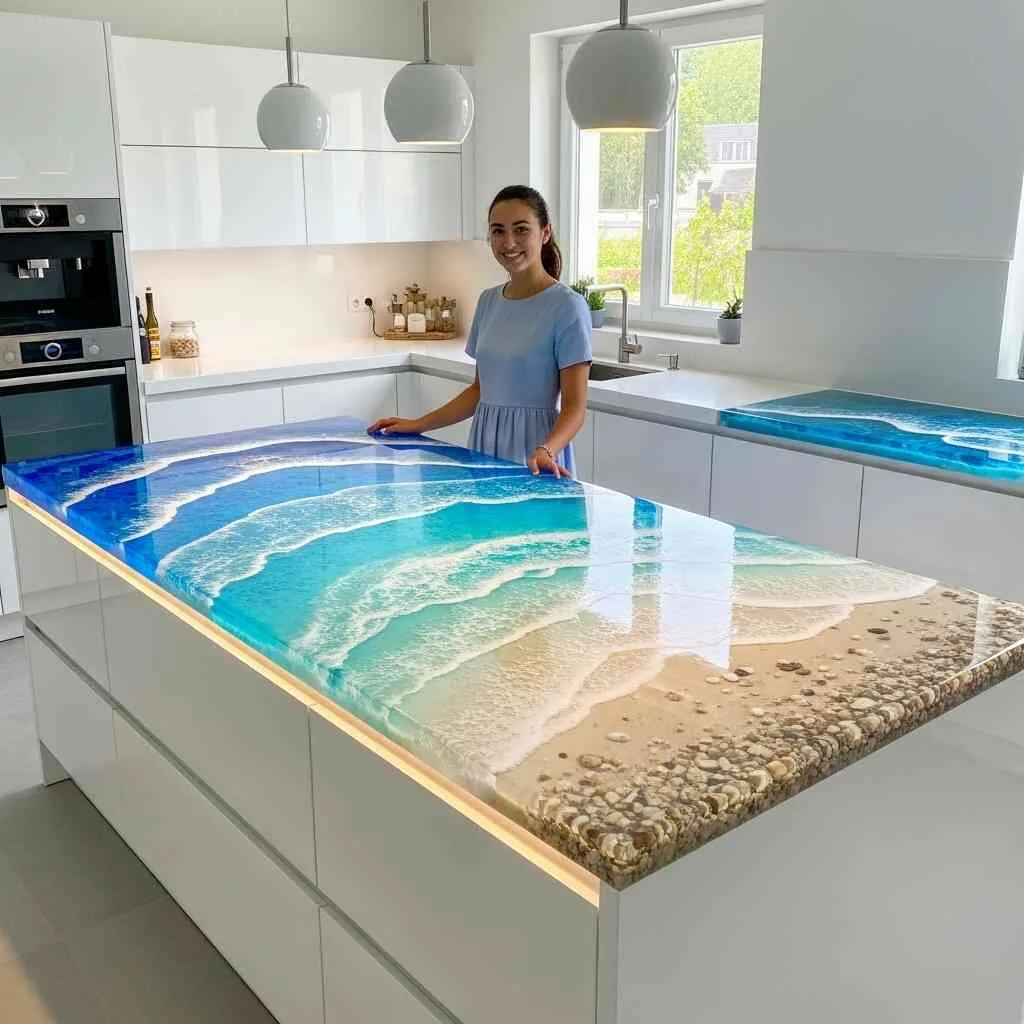
In this section, we delve into the primary types of beach-inspired countertops available on the market today. Understanding the strengths and limitations of each helps homeowners make informed choices aligned with their aesthetic goals and practical needs.
Natural Stone Countertops – Embracing Earthy Elegance and Coastal Charms
Natural stone remains a favorite choice for beach countertops due to its unique patterns, durability, and organic appeal. Stones like quartzite, marble, and limestone evoke the essence of the coast, with textures reminiscent of sandy shores, seashells, and pebbles.
Natural stones offer unparalleled authenticity, with each slab featuring distinctive veining and color variations that tell a story of geological history. For beach homes, choosing light-colored stones such as cream, beige, or light grey can enhance a breezy, open atmosphere akin to seaside serenity.
These materials are highly durable, resistant to heat and scratches, but they require regular sealing to prevent staining from salt, oil, and acidic substances. Their natural aesthetic creates a seamless transition between indoors and the natural surroundings, making them perfect for kitchens, bathrooms, and outdoor patios.
Engineered Quartz – A Resilient, Low-Maintenance Alternative
Engineered quartz countertops are manufactured by combining crushed quartz with resins and pigments. This process allows for customization in color and pattern, making it a versatile choice for beach-themed designs. For example, quartz slabs can replicate the look of weathered driftwood, sandy beaches, or oceanic blues and greens.
One of the key advantages of quartz is its exceptional resistance to stains, scratches, and heat, which is particularly valuable in high-traffic kitchens near the coast where sand, salt, and moisture are prevalent. Additionally, engineered quartz doesn’t require sealing, simplifying maintenance for busy households.
Design-wise, quartz allows for the creation of consistent patterns, avoiding some of the natural irregularities found in stone, which may be advantageous for a sleek, modern coastal aesthetic. Many manufacturers offer quartz in textured finishes that mimic natural stone or weathered wood, adding depth and tactile interest.

Reclaimed and Upcycled Materials – Sustainability meets Coastal Style
Using reclaimed wood, seashell-inlaid surfaces, or recycled glass for countertops embodies eco-consciousness and coastal charm. Reclaimed wood, distressed with weathered finishes and soft hues, can bring warmth and texture to beach-inspired interiors, echoing driftwood found along shorelines.
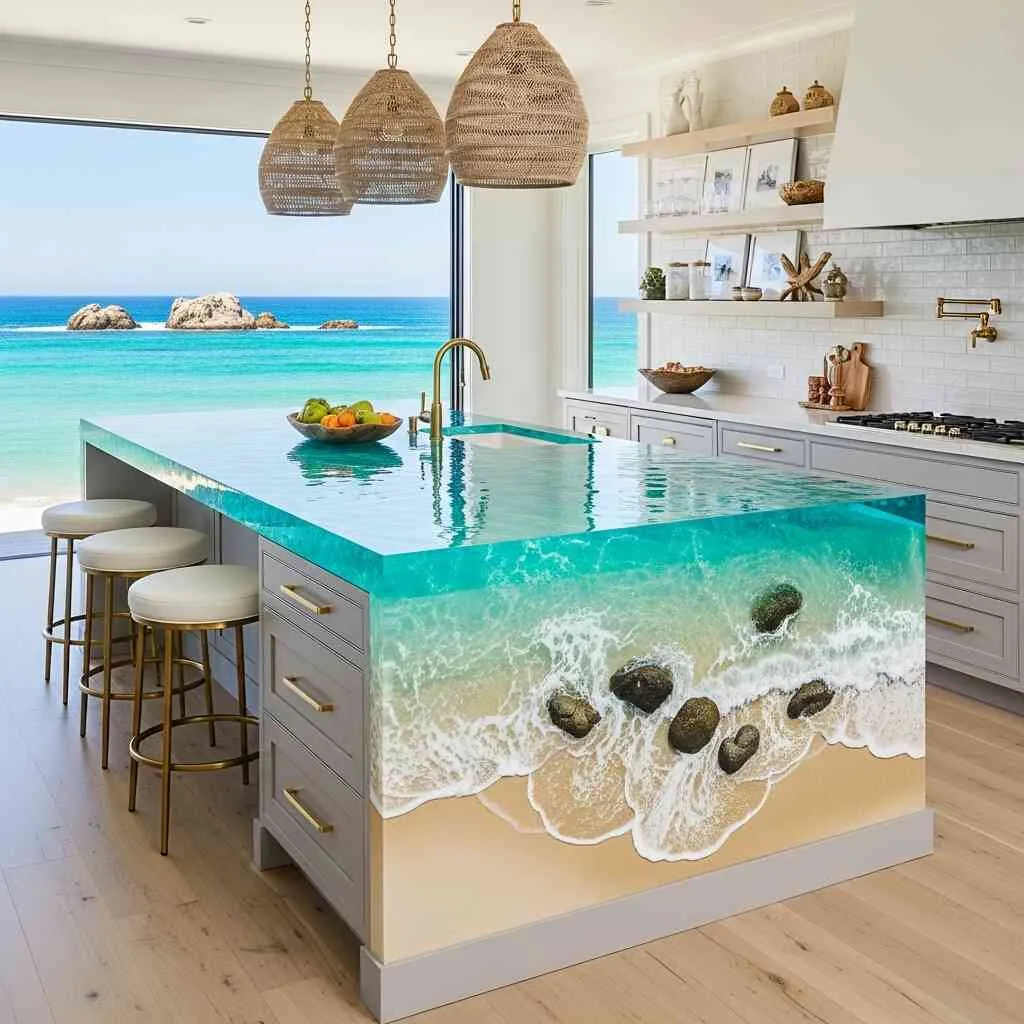
Recycled glass countertops incorporate small fragments of sea glass, chips of shells, or colored glass pieces set in resin or cement. These surfaces sparkle with oceanic hues, creating a vibrant focal point that celebrates sustainability and natural beauty.
Opting for reclaimed materials not only adds character but also reduces environmental impact. These surfaces typically require specific sealing and maintenance but reward owners with durability and a distinct coastal personality. They work wonderfully in kitchens, bar areas, or outdoor kitchens where the charm of the sea can be appreciated daily.
Synthetic and Composite Options – Versatility and Customization for Coastal Themes
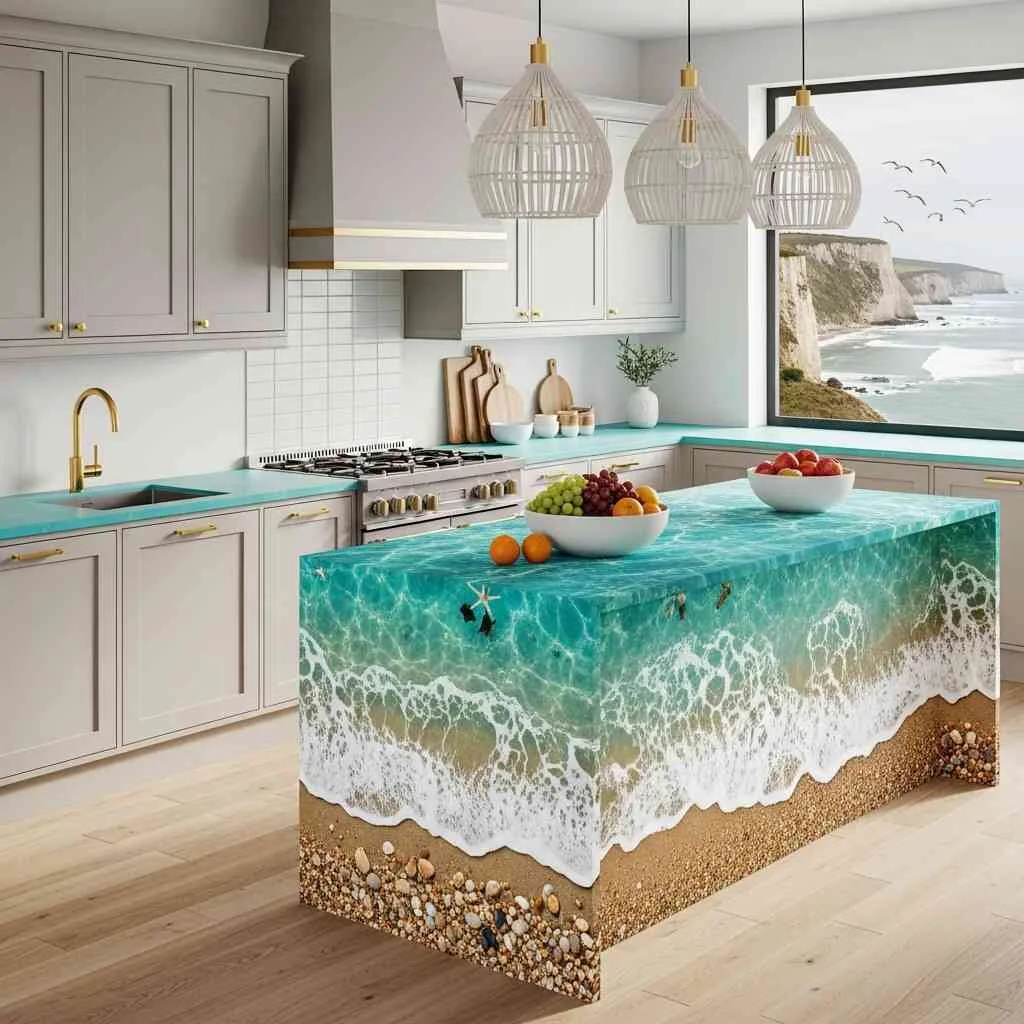
Advances in material science have led to a diverse range of synthetic countertops that can be tailored to achieve beach-inspired looks. These surfaces, often made with durable resins and composites, can mimic natural textures such as coral reefs, sandy beaches, or ocean waves.
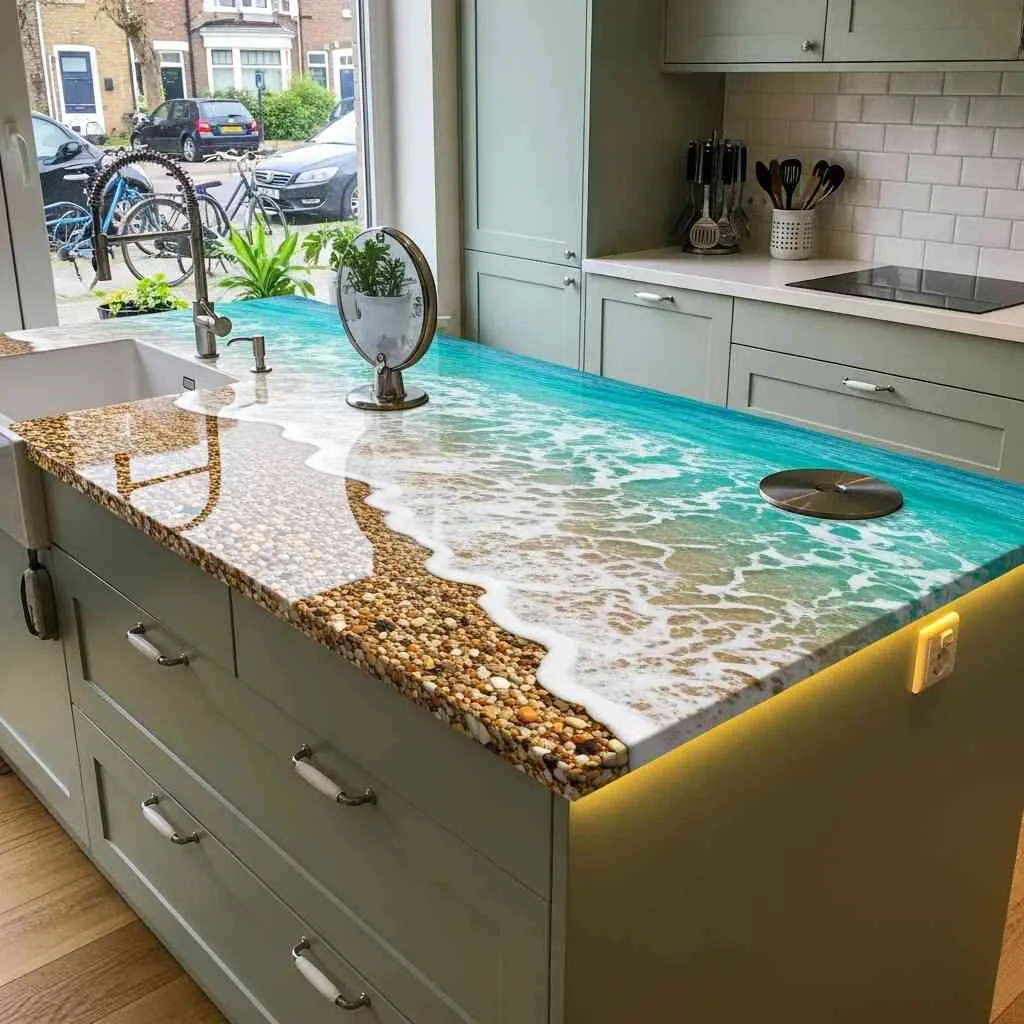
Synthetic countertops are highly customizable in terms of color consistency, pattern, and surface texture. They’re resistant to moisture, salt, mold, and fading, making them an excellent choice for coastal environments exposed to humidity or salt air.
Whether selecting solid color surfaces in shades of turquoise or designing intricate patterns that resemble sea shells or corals, synthetic materials provide flexibility for creative coastal design concepts. They are also often easier to install and maintain, offering resilient options for homes by the coast.
Design Ideas for Creating a Coastal Oasis with Beach Countertops
Designing a space that captures the essence of a beach involves blending materials, colors, and decorative elements thoughtfully to evoke the tranquility and vibrancy of seaside environments. Beach countertops serve as focal points and foundational elements that can anchor the entire coastal aesthetic.
In this section, we will explore various design themes, color palettes, and layout ideas to help you craft your personal coastal retreat using beach countertops as the central feature. Whether contemporary, rustic, or eclectic, the right design approach can maximize the impact of your surf-inspired surfaces.
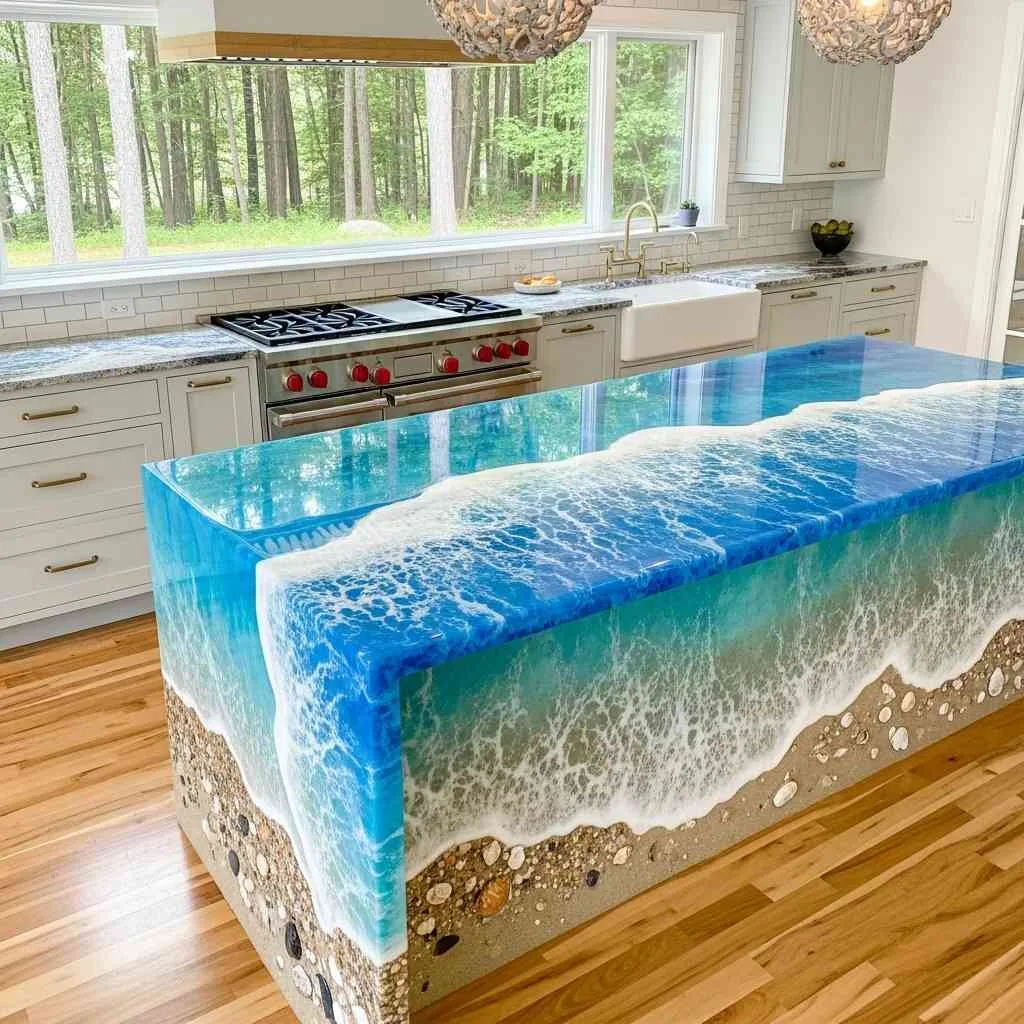
Coastal Color Palettes – The Power of Blue, Beige, and Seafoam Tones
The foundation of any beach-inspired design is a thoughtfully chosen color palette that reflects the seaside landscape. Blues, aquas, whites, sandy beiges, and seafoam greens evoke the calmness and freshness of the ocean.
To successfully incorporate beach countertops, consider selecting colors that complement the exact shades of your surfaces. For example, a quartz countertop in ocean blue pairs beautifully with white cabinets and soft blue walls, creating a cohesive and serene environment.
Additionally, accentuated with subtle hints of coral or sunset pink, these palettes can alert and energize the space. Combining soft neutrals with vibrant oceanic shades allows for versatile design that can be casual or sophisticated depending on furniture, accessories, and lighting choices.
Layout and Material Pairing – Achieving Balance and Cohesion
The arrangement of materials and fixtures around beach countertops significantly impacts the overall aesthetic. For instance, pairing reclaimed driftwood cabinetry with a driftwood-look quartz countertop creates a natural, weathered coastal vibe.
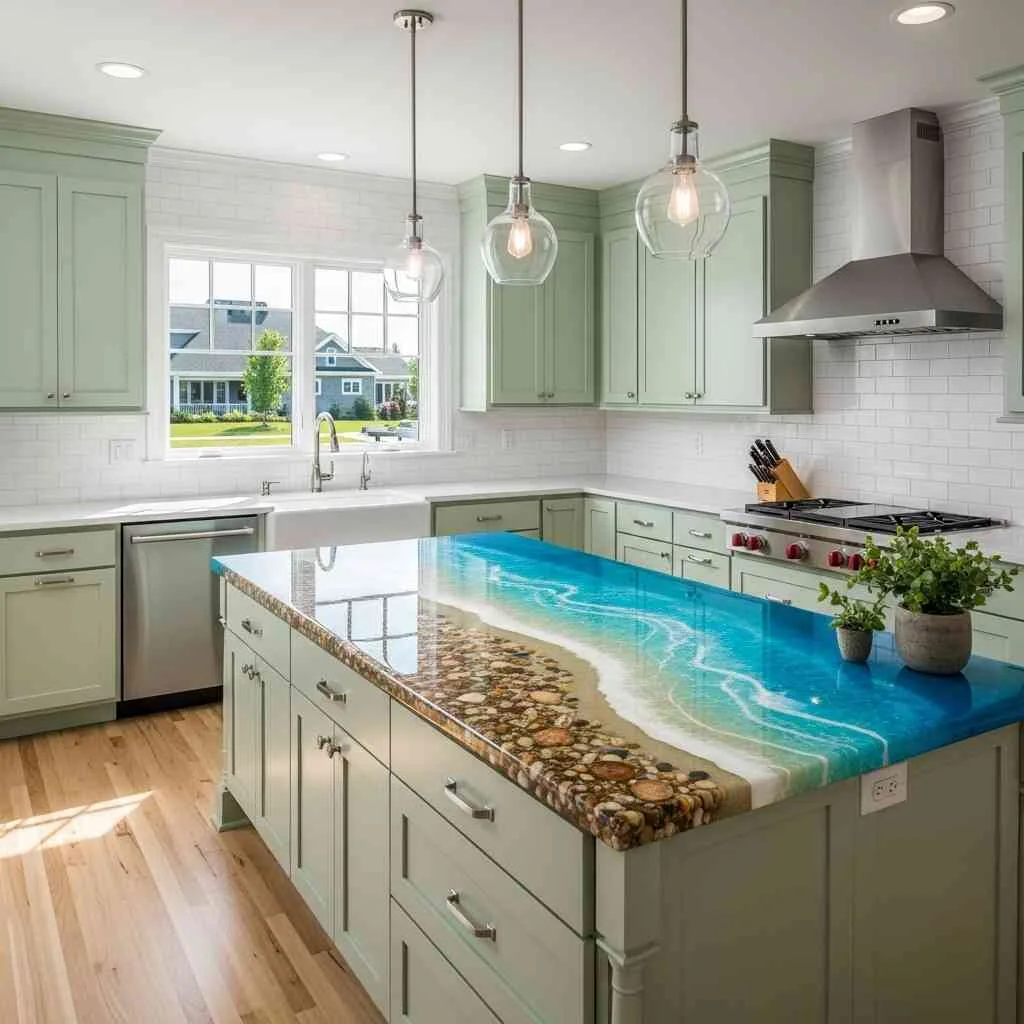
Alternatively, pairing sleek white cabinets with a textured sand-colored granite or engineered quartz can yield a modern, airy coastal kitchen. Consider balancing glossy or matte finishes, as matte surfaces tend to evoke a more relaxed, organic feel, while gloss finishes add a touch of sophistication.
Using natural fiber rugs, wicker accents, and shell-inspired decor around your countertops enhances the beach aesthetic and creates a cohesive, inviting space.
Incorporating Nautical Accents and Marine Elements
Decorative accents tie together the entire coastal look. Incorporate elements such as driftwood, seashells, coral sculptures, and maritime lanterns. These can be displayed on open shelves or used as centerpiece decor.
For example, a countertop with embedded seashells or sea glass boasts a unique, textured surface that evokes coastal depth. Incorporate marine-inspired hardware and fixtures, like brushed nickel or distressed wood pulls, to complement the beach countertops’ natural vibe.
Lighting plays an integral role; opt for pendant lights resembling fishing lanterns or fixtures with a weathered finish to reinforce the seaside theme.
Practical Tips to Make the Most of Beach Countertops in Your Interior
When designing with beach countertops, it’s essential to consider both aesthetics and practicality. Durable surfaces are vital for high-use areas, especially if you wish to evoke natural coastal aesthetics without sacrificing functionality.
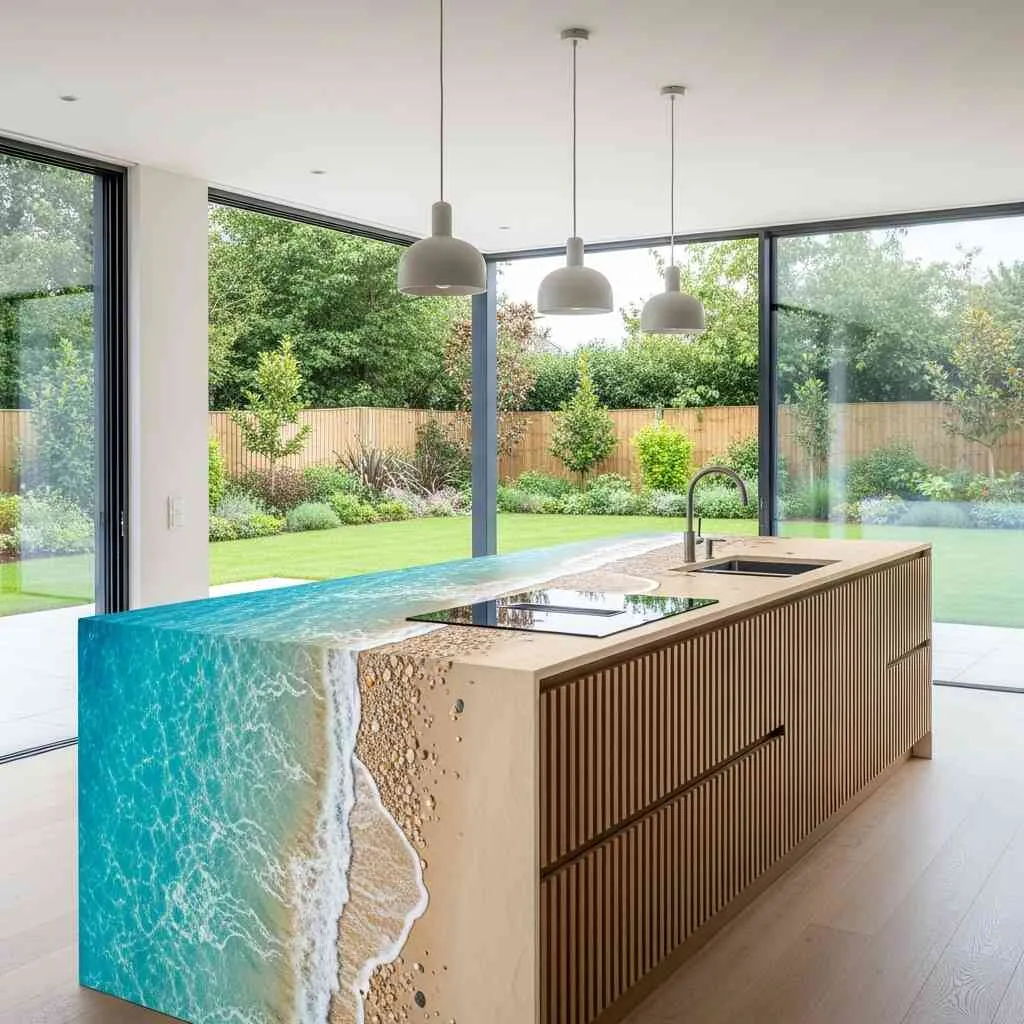
Opt for slip-resistant finishes if countertops will be in outdoor or humid environments. Regular cleaning with mild, non-abrasive agents preserves the beauty of natural stones and reclaimed materials. Sealing natural stones prevents staining from salt and moisture common at the coast.
Finally, layer your space with coastal textiles—cotton or linen curtains, woven baskets, and plush towels—to create an authentic, inviting seaside atmosphere.
How to Use Beach Countertops Effectively – Practical Guidance and Maintenance Tips
Beach countertops are more than just a visual feature—they are a functional element that can significantly elevate your space when used properly. This section offers practical guidance, examples of integration, and maintenance tips for ensuring your beach-inspired surfaces stay beautiful and durable over time.
How to Properly Install Beach Countertops for Optimal Results
The installation process influences the longevity and aesthetic impact of your beach countertops. Proper measurement, surface preparation, and sealing are fundamental.
- Measure carefully: Precise measurements ensure the perfect fit and minimize waste.
- Surface prep: A stable, level base prevents cracks or unevenness.
- Sealing natural stone: Applying the right sealant protects against salt, moisture, and stains.
- Professional installation: Especially important for heavy or complex materials such as natural stone or reclaimed wood.
Consulting with experts experienced in coastal designs guarantees your countertops will withstand the environmental conditions of seaside living while enhancing your interiors.
Choosing the Right Finishes and Textures
The finish of your beach countertops affects both their visual appeal and practical use. Satin or matte finishes tend to hide fingerprints and water spots, making them ideal for outdoor or high-traffic areas.
Textured surfaces, such as leathered or honed finishes, mimic natural elements like sand or weathered wood, adding tactile appeal. Conversely, polished surfaces can reveal vivid veining and create a sleek, luxurious look.
Match the finish with your lifestyle. For homes near the coast, using textured or matte finishes can mask scratches and wear caused by sand and salt.
Maintenance and Care for Beach-Inspired Surfaces
Proper care extends the lifespan of your beach countertops, especially when exposed to harsh coastal elements. Some key considerations include:
- Regular cleaning with gentle, pH-neutral cleaners.
- Avoiding harsh chemicals or abrasive cleaning tools that may damage surfaces.
- Promptly wiping up spills to prevent staining, especially on porous stones.
- Periodic resealing of natural stone surfaces, depending on the usage and manufacturer’s recommendations.
- Protecting surfaces from heavy or sharp objects to prevent scratches or chips.
Being consistent with maintenance not only preserves the beauty but also ensures your countertops remain resilient against the elements frequently encountered in coastal environments.
Comparing Different Materials
| Material | Durability | Maintenance | Aesthetic Appeal | Cost | Environmental Impact |
|---|---|---|---|---|---|
| Natural stone | High | Moderate | Very authentic | High | Variable |
| Engineered quartz | Very high | Low | Consistent | Moderate | Low to moderate |
| Reclaimed wood | Moderate | Moderate | Rustic, warm | Moderate | High (recycling) |
| Recycled glass | High | Moderate | Vibrant, textured | Moderate | High (recycling) |
| Synthetic (resin) | Very high | Low | Customizable | Moderate | Variable |
This comparative table highlights the critical factors to consider when selecting a beach-inspired countertop material tailored to your needs and environment.
FAQs About Beach Countertops
What are the best materials for beach countertops?
The best materials include natural stones like quartzite or marble, engineered quartz for low maintenance, and sustainable options such as reclaimed wood and recycled glass for eco-conscious choices.
How do I maintain and clean beach countertops?
Regular cleaning with gentle, non-abrasive cleaners, prompt spill cleanup, periodic sealing for porous stones, and avoiding harsh chemicals ensures longevity and beauty.
Are beach countertops suitable for outdoor use?
Yes, especially materials like engineered quartz and certain natural stones designed to withstand outdoor environments. Proper sealing and maintenance are key.
How do I incorporate beach countertops into a coastal interior design?
Choose a color palette inspired by the ocean, pair with marine-themed decor, use natural textures, and incorporate nautical accents to create a cohesive beach-inspired space.
Can beach countertops be DIY-installed?
While some synthetic options might be suitable for DIY installation, natural stone and reclaimed wood typically require professional installation to ensure safety, durability, and a high-quality finish.
Conclusion
Beach countertops embody the essence of coastal living — blending natural beauty with durability and style. By selecting the right materials, colors, and design elements, you can create breathtaking spaces that evoke the serenity of the seaside. Whether through natural stones, reclaimed materials, or synthetic surfaces, these countertops serve as versatile focal points that bring unmistakable charm and character to your home. Prioritizing proper installation, maintenance, and thoughtful integration ensures your beach-inspired countertops will continue to inspire and impress for years to come.