When Sound Meets Steam
There’s a special silence that hangs in the minutes before a set: the hum of amps warming up, the soft rustle of fingers on strings, and the ritual clink of a coffee cup being set on a stage monitor. For many musicians, coffee and guitar are companion rituals — one wakes the body, the other wakes the imagination. Guitar Coffee Makers are a playful, surprisingly practical expression of that kinship: appliances and designs that marry the silhouette and soul of a guitar with the everyday joy of brewing coffee.
This article explores why Guitar Coffee Makers are more than novelty items: they’re design statements, studio essentials, and conversation starters. We’ll dive into the aesthetics and engineering behind them, explore the rituals and pairings that make coffee and guitar naturally complementary, offer practical buying and care advice, and suggest creative ways to make the brew-in-tune experience your own. Whether you’re a gigging guitarist, a bedroom strummer, or simply someone who loves both music and a good cup of joe, this guide will help you understand — and celebrate — the world where strings meet steam.
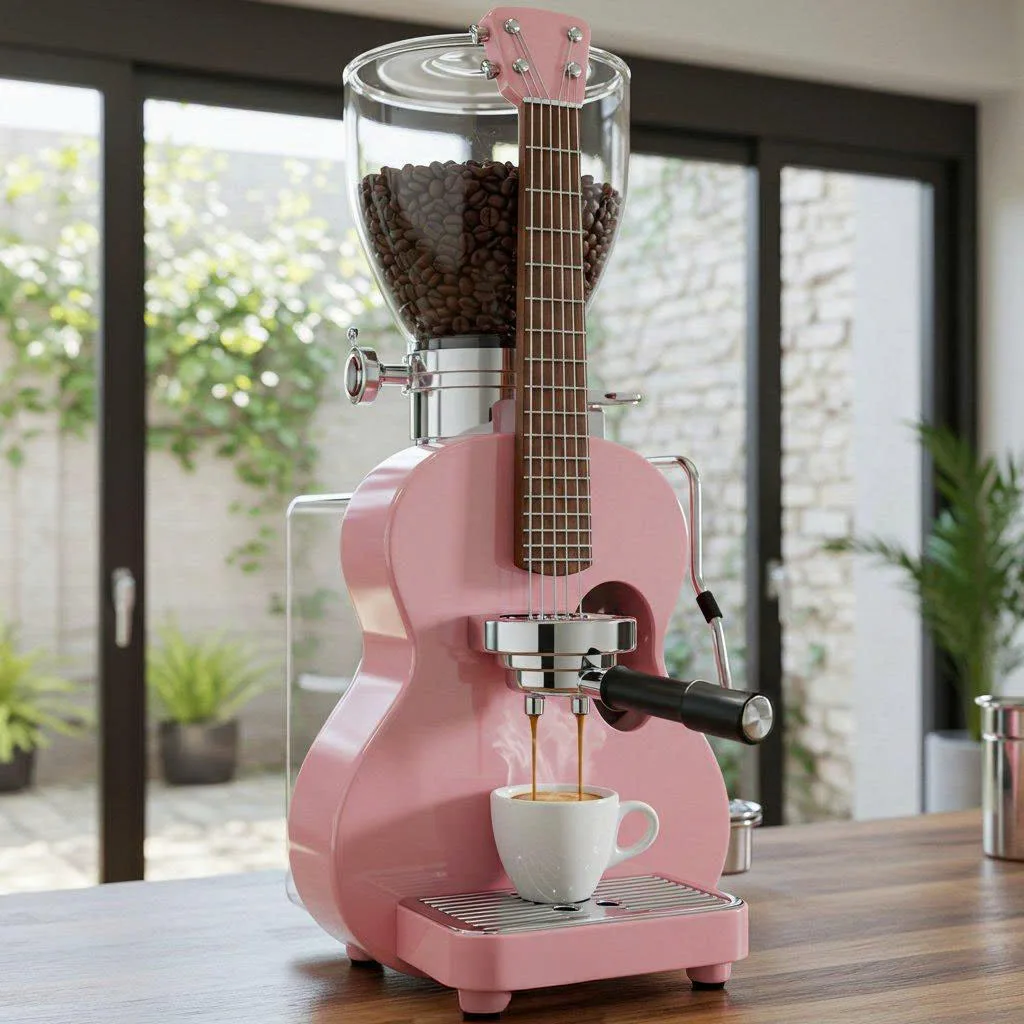
The fusion of form and function: what is a Guitar Coffee Maker?
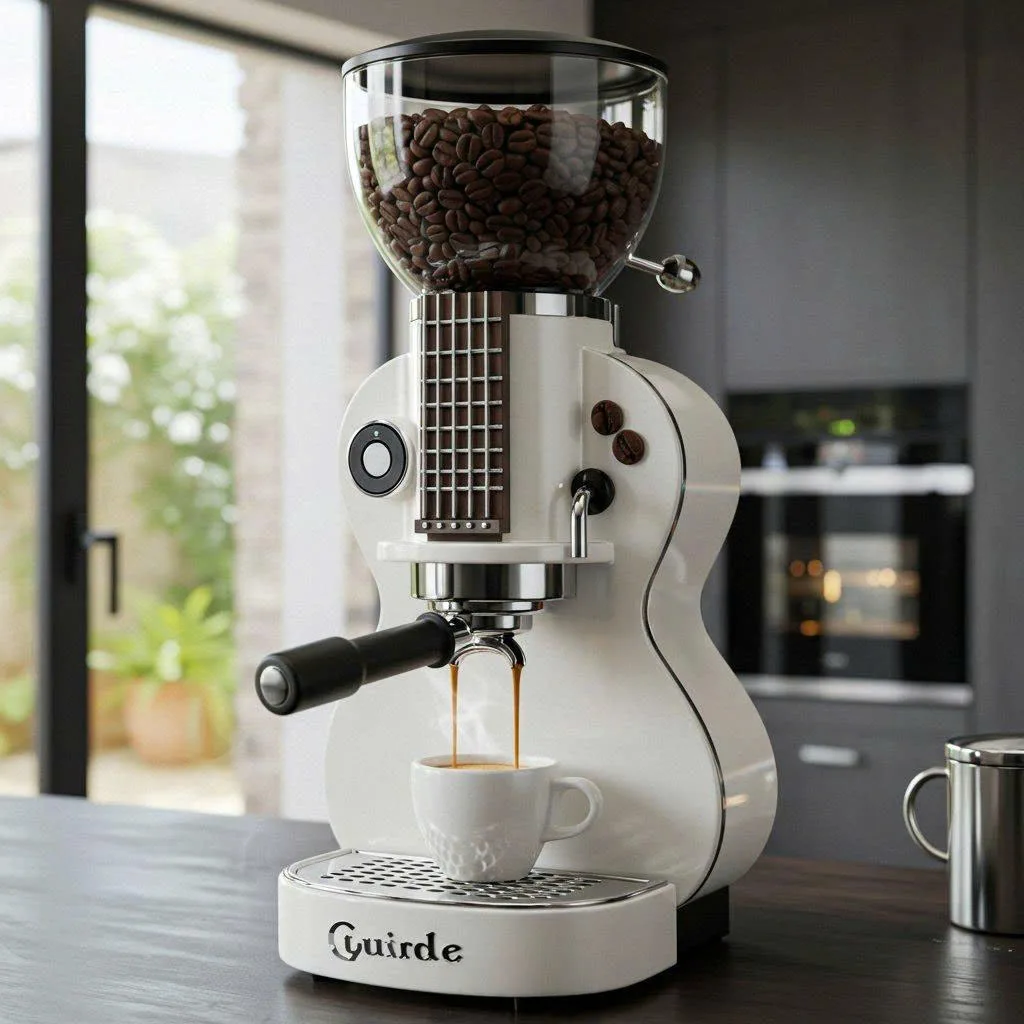
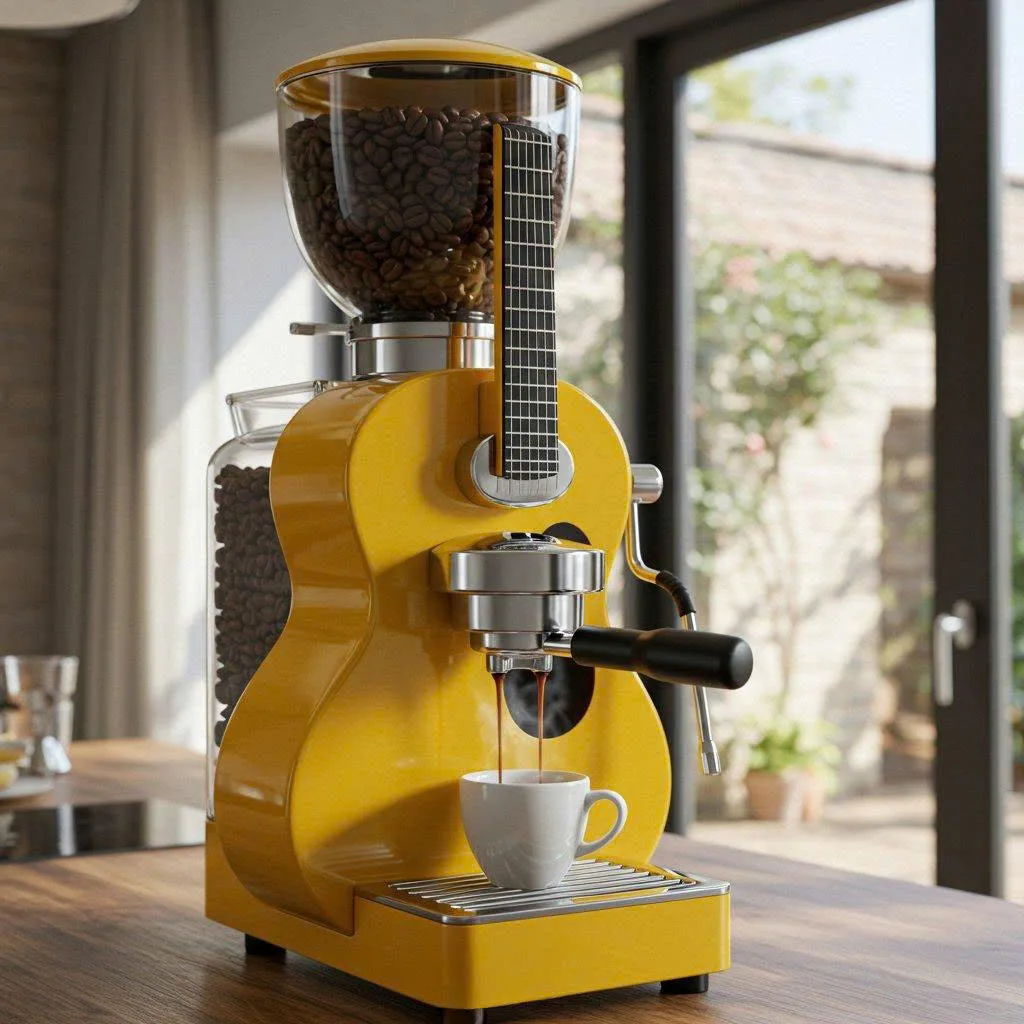
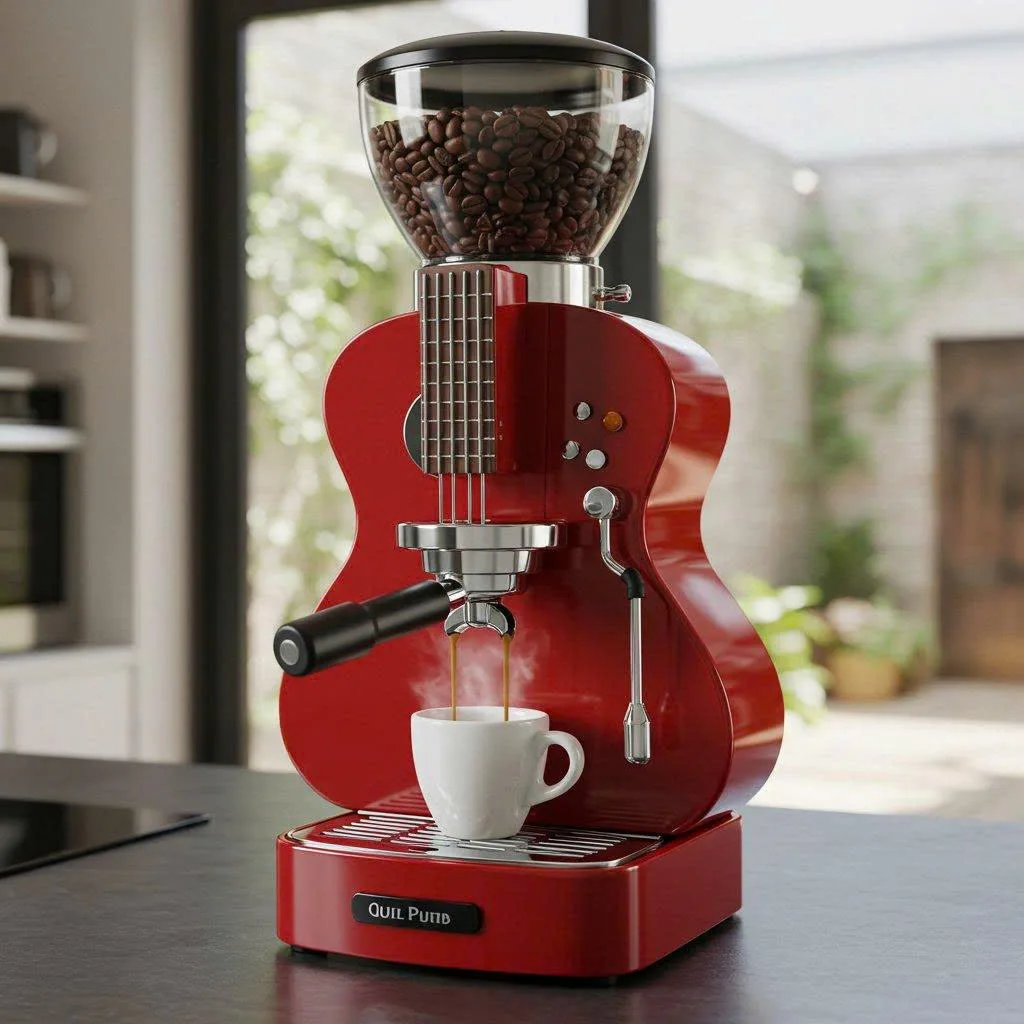
At its core, a Guitar Coffee Maker can mean a few things. Some are literal coffee machines shaped like guitars; others are compact coffee-brewing devices (pour-over stands, single-serve machines, or kettles) integrated into guitar-inspired housings or designs. There are also novelty mugs, electric kettles with guitar motifs, and even café installations that use guitar bodies as counters or housings for espresso machines.
What unites them is the marriage of two intents: musical aesthetics and brewing utility. Good designs keep functionality front and center — the machine must brew reliably — while flirting visually with guitar lines, finishes, or hardware. The result is an item that feels like it belongs in a rehearsal room or studio as much as in a living room: part tool, part art object, part identity marker.
Why Guitar Coffee Makers resonate with music lovers
Music is ritual. Tuning up, stretching fingers, running scales — these small acts prime the mind the same way a cup of coffee wakes the senses. Guitarists, in particular, are tactile people: they respond to weight, grain, feel, and finish. When a coffee maker speaks the same visual and material language as their instrument, it becomes an extension of their creative space.
There’s also an emotional resonance. Instruments are intimate objects loaded with memory — first chord, first gig, that one late-night practice where everything clicked. A Guitar Coffee Maker echoes that intimacy. It tells a story in the kitchen before the first song is played, or keeps the vibe warm during late-night writing sessions. For a touring musician or a home studio devotee, owning one is a small but constant affirmation of identity: coffee for the body, guitar for the soul.
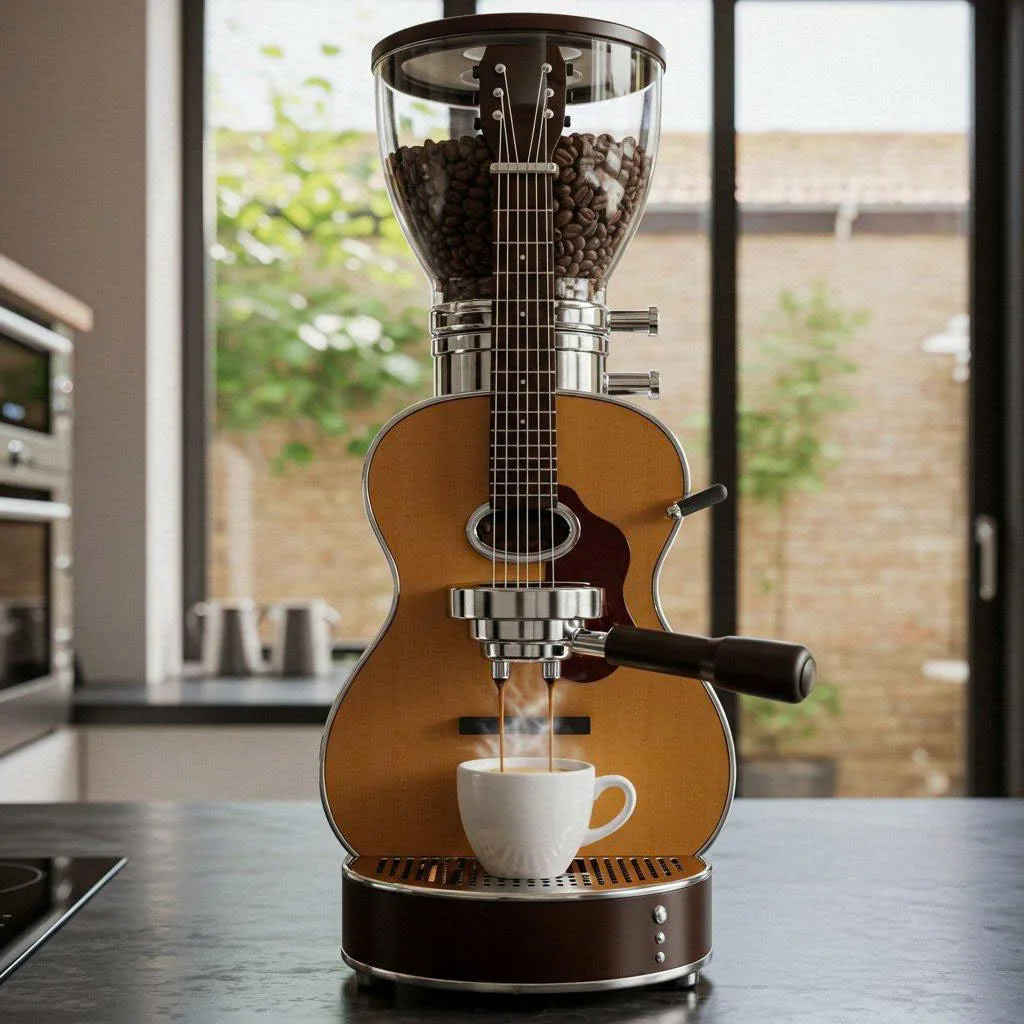
Design languages: from whimsical to refined
Designs for Guitar Coffee Makers span a broad spectrum:
- Whimsical and playful: bright colors, caricatured shapes like oversized carrots or tiny Stratocasters, and surfaces that invite a smile. These pieces are conversation starters and work well in creative spaces and cafes with a casual, eclectic vibe.
- Vintage-inspired: nods to sunburst finishes, reclaimed wood, and aged brass hardware. These designs appeal to lovers of classic guitars and retro gear, fitting beautifully in vinyl corners and analog-friendly studios.
- Minimalist modern: clean lines, matte finishes, and subtle fretboard inlays translated into metal accents. These are designed to be stylish yet unobtrusive — for people who want a hint of guitar culture without overt kitsch.
- Artisanal and bespoke: handcrafted bodies carved from tonewoods, inlaid with mother-of-pearl or resin, and made in limited runs. Some designers collaborate with luthiers to reuse old instrument parts, turning them into small-run coffee appliances or stands.
In each language, the goal is balance: the guitar motif should feel integrated, not tacked on. The machines that succeed are those that respect both the ergonomics of brewing and the visual archetypes of guitars.
How Guitar Coffee Makers work: types and mechanisms
When investigating Guitar Coffee Makers, you’ll encounter a few practical types:
- Aesthetic housings around standard machines
These use an off-the-shelf espresso or pod machine fitted into a guitar-shaped cabinet or encircled by guitar-like panels. They retain reliable internal mechanics but add visual flair outside. - Integrated single-serve units
Compact, electric single-cup brewers shaped like guitar bodies. These often use capsules or filter baskets and include small water tanks. They’re portable and ideal for studios or small apartments. - Pour-over stands and kettles
Guitar-shaped pour-over stands position a dripper over a carafe or mug. Matching gooseneck kettles, styled with wood grain or metallic guitar finishes, complete the aesthetic. - Specialty espresso units referencing guitar hardware
Think levers resembling tremolo bars, knobs styled like control pots, and portafilters with wood-inlay handles. These designs often adapt espresso workflows to a guitar motif while keeping functional components standard. - Repurposed instrument bodies
Creative builders sometimes convert retired guitar bodies into housings that conceal kettles or hold filter apparatus. These can be beautiful but require careful work to ensure safety and performance.
From a user perspective, the differences matter: if you want consistent espresso shots, prioritize machines with proven boiler systems. If the object is more for display and light brewing, single-serve or pour-over options may be enough. Regardless, always check the technical specs: water capacity, heating element wattage, and the ease of cleaning.
Ritual and routine: pairing coffee styles with guitar moods
Coffee and music pair like flavors and chords — each influences the other. Below are pairing ideas to help you create rituals that feel composed:
- Acoustic Morning — Light Roast, Pour-Over
For morning songwriting or fingerstyle practice: a clean, floral pour-over (light roast) mirrors the clear, intimate tones of an acoustic guitar. The slow pour-over process also creates a meditative tempo for warm-up routines. - Blues Practice — Medium-Dark Roast, Drip or French Press
Richer, rounder flavors with chocolate and caramel notes fit the smoky, expressive lines of blues and slide playing. A French press’s textured mouthfeel complements these tonal colors. - Electric Late Night — Espresso or Ristretto
For amp-testing and late-night compositional flights, a concentrated espresso matches the energy and immediacy of electric playing. The intensity of the shot pairs with effects pedals and high-gain settings. - Indie Writing Session — Filter Coffee, Specialty Blend
For indie and experimental work, a balanced filter brew with nuanced acidity keeps the mind alert without overpowering subtle ideas.
Create playlists that reflect these pairings — let the brewing tempo dictate the song length or vice versa. A slow pour-over could be accompanied by a long, ambient guitar loop; a quick espresso shot might go with a punchy, three-minute rock number. The ritual is the art: it sets the pacing and mood of creative work.
A practical recipe: “Strum & Steam” pour-over
Try this simple ritual to feel the connection between brewing and playing.
Ingredients and gear:
- Freshly roasted beans (18g for a single cup)
- Burr grinder
- Pour-over dripper (V60 or similar) mounted on a guitar-inspired stand or placed on a guitar-themed coaster
- Gooseneck kettle
- Scale and timer
- Mug or carafe
Steps:
- Heat water to 94°C (about 201°F). Pre-wet the filter to remove papery flavors and warm the dripper.
- Grind beans to medium-fine. Place the ground coffee into the dripper and level the bed.
- Start the timer. Pour 30–40g of water for the bloom, let it rest 30–45 seconds.
- Continue pouring in slow, concentric circles until you reach 300g total water. Aim for a total brew time of 2.5–3.5 minutes.
- While the coffee drips, tune your guitar — use the time to play a short warmup riff.
- When finished, inhale the aroma, take a sip, and play the first phrase of your session.
This ritual turns brewing into a musical prelude: the meter of the pour echoes the meter of the song.
Buying guide: what to look for in a Guitar Coffee Maker
If you’re considering a Guitar Coffee Maker, here are practical points to evaluate:
- Functionality first: Does it brew the quality and style of coffee you prefer? A guitar-themed exterior is fun, but a poor boiler or uneven extraction will frustrate you. Look for reliable internal components: good heating element wattage, stable temperature control, and easy-to-source parts for repairs.
- Materials and finish: If the item uses tonewoods or reclaimed instrument parts, verify they’re treated for durability near heat and moisture. Metal accents should be corrosion-resistant.
- Size and capacity: Studios often prefer compact units; a home living room might accommodate a larger showpiece. Check water tank volume and how many cups it can produce before refilling.
- Maintenance and cleaning: Removable parts, accessible drip trays, and clear descaling instructions are essential. Avoid models with hard-to-clean crevices where coffee residue can hide.
- Safety: Any product that combines heat, water, and possibly electronics needs certifications (CE, UL, or local equivalents where applicable). Beware of DIY conversions sold without clear safety documentation.
- Portability: If you gig and like to make coffee on the road, choose a compact, durable model. For stationary studio use, you can prioritize aesthetics and larger capacity.
- Noise and vibration: Some espresso machines have noisy pumps — consider whether you want to brew quietly between takes.
- Warranty and support: Artistic products sometimes come from small makers. Check warranty terms and whether replacement parts are available.
- Price and value: These items range from affordable novelty makers to high-end bespoke appliances. Determine if you want a conversation piece or a long-term studio tool.
Maintenance and care: keeping your Guitar Coffee Maker stage-ready
Proper care extends the life and flavor of your machine:
- Daily cleaning: Wipe the exterior after use, empty drips, and rinse removable parts. Coffee oils can build up quickly and dull both appearance and taste.
- Weekly care: Backflush espresso machines as recommended, clean filter baskets and portafilters, and descale pour-over kettles if mineral buildup appears.
- Protect finishes: If your unit has wood veneers or lacquered surfaces, avoid harsh cleaners. Use a slightly damp microfiber cloth and a gentle wood-safe cleaner when necessary.
- Storage: Keep the machine in a dry, well-ventilated area. If you use it infrequently, run a brief rinse before brewing to refresh water passages.
- Electrical safety: Inspect cords and connections periodically. If you sense unusual smells, sparks, or heat, unplug and consult a technician.
- Repair and part sourcing: For bespoke models, ask the maker for parts lists. Retain manuals and take photos before attempting any non-trivial repairs.
DIY and customization: personalizing your brew-in-tune setup (safely)
Many musicians love to tinker. If you want to customize a Guitar Coffee Maker, follow two rules: keep water and electricity separate from delicate guitar components, and prioritize safety.
Safe customization ideas:
- Cosmetic mods: Replace control knobs with guitar-style knobs, add fretboard markers as decals, or apply a sunburst finish using a professional luthier-grade painter.
- Accessory builds: Create a matching guitar-shaped tray for cups, a pedalboard-style shelf to hold pods and filters, or amp-style coasters.
- Standmaking: Build a pour-over stand using a hollow guitar neck as a column, but mount the brewing vessel separately on a stable shelf to avoid heat transfer.
- Sound-friendly integrations: Add a built-in timer with a metronome-like click for practice sessions, or a small Bluetooth speaker integrated into the base for playing backing tracks.
Unsafe/custom mod risks to avoid:
- Embedding heating elements inside wood without proper insulation and ventilation.
- Routing electrical wiring through untreated instrument wood.
- Using non-certified components in high-voltage areas.
When in doubt, collaborate with professionals: luthiers for finishes and cabinetmakers or electricians for any structural or electrical modifications.
Style trends and notable aesthetics
A few trends have emerged in the world of themed appliances that apply to Guitar Coffee Makers:
- Sustainable materials: Reclaimed guitar parts and responsibly sourced woods are increasingly attractive to buyers concerned with ethics and story.
- Hybrid café gear: Coffee shops with a strong music identity are commissioning custom units that double as bar counters and instrument displays.
- Limited-run artist pieces: Some designers release small batches featuring hand-inlaid motifs, signed finishes, or collaborations with well-known local musicians.
- Modular designs: Units that allow you to swap panels, knobs, or handles let owners evolve their look without replacing the whole machine.
- Tech-forward features: Smart controls, app-based preheating, and built-in timers that sync with song tempos are showing up more often, marrying analog charm with digital convenience.
These trends reflect a broader movement: lifestyle objects that tell a story and enhance a room’s creative energy, not just perform a task.
Sustainability and ethics: brewing consciously
Choosing a Guitar Coffee Maker also invites reflection on sustainability:
- Materials: Prefer models made from responsibly sourced woods, recycled metals, or modular parts that can be repaired.
- Energy use: Espresso machines and kettles consume electricity. Look for energy-efficient features such as quick-heat boilers, insulation, and auto-shutoff.
- Coffee sourcing: Pair your machine with beans from ethical roasters who prioritize direct trade and sustainable farming. The ritual matters — choose beans that align with the values your instrument represents.
- Longevity over trendiness: A well-built item used for years has less environmental impact than trendy single-use novelties. Invest in craftsmanship when possible.
Community, culture, and presentation
Guitar Coffee Makers are social objects. They sit at the intersection of hobbies and create communities:
- Studio hubs: Musicians love to show off their gear. A guitar-themed coffee maker can anchor a home studio, inviting collaborators to linger between takes.
- Social media appeal: Photos of a retro sunburst espresso machine against a wall of pedals make for viral posts and lifestyle content. Use short clips of the brewing process synchronized with a riff to create eye-catching reels.
- Pop-up events and café collaborations: Baristas and musicians sometimes team up for themed nights — “Acoustic Mornings” or “Riff & Roast” — where the coffee and music are curated together.
- Gifting culture: These machines are popular gifts for music teachers, bandmates, and lovers of unique home décor. They read as thoughtful and personal.
- Playlists and pairings: Some owners create dedicated playlists to match their brewing ritual. Share yours: “Sunburst Mornings,” “Late Night Pedalboard,” or “Fingerstyle & French Press.”
Gift guide: who should receive a Guitar Coffee Maker?
Guitar Coffee Makers make memorable, personal gifts. Ideal recipients include:
- The practice-room regular: Someone who spends hours with their instrument will appreciate the convenience and theming.
- Studio owners and producers: Adds character to creative spaces and keeps collaborators caffeinated.
- Music teachers: Practical and whimsical, it’s a great “thank you” for years of guidance.
- Collectors and gear nerds: Those who value aesthetic gear will see this as a tasteful addition.
- Café owners with a music focus: A conversation-starting centerpiece that reinforces brand identity.
When gifting, include a bag of high-quality beans and a short “ritual card” describing your favorite brew-for-song pairing to make the present feel curated.
A note on safety and authenticity
Because Guitar Coffee Makers blend form and utility, safety must be a priority. Always:
- Confirm electrical certifications and safety standards before purchasing.
- Read care instructions and follow descaling timelines.
- Avoid placing heat sources on or near delicate finishes.
- If considering a repurposed or handmade piece, verify the builder’s credentials and the materials used.
Authenticity matters, too. A well-executed guitar-themed piece honors the instrument’s lineage — it doesn’t trivialize it. Choose designs that feel respectful rather than gimmicky if your aim is craft and longevity.
The ritual as composition: making the everyday musical
The true magic of Guitar Coffee Makers isn’t simply in their shape. It’s in how they scaffold ritual. A musician’s life is full of micro-rituals — putting on a strap, tuning to A=440, rolling fingers across a motif. Brewing is another ritual that sets tempo and tone. When your coffee maker looks like an instrument, the ritual becomes a composition itself: you’re tuning not just strings but the room, the palate, and the attention needed to create.
Imagine the arc of a day: a slow pour-over as sunlight cuts across the fretboard, an espresso shot before a late-night jam, the clinking of a spoon like a metronome. In small ways, Guitar Coffee Makers make the mundane ceremonial. They remind us that creativity thrives when daily life is beautiful and meaningful.
Conclusion — Brew in tune, live in rhythm
Guitar Coffee Makers are more than clever novelties. They’re objects that celebrate two complementary arts: the hand-crafted voice of a guitar and the slow alchemy of good coffee. When thoughtfully designed, they bring beauty, ritual, and efficiency into the spaces where music gets made.
Whether you want a compact, practical pour-over stand for your home studio, a bespoke espresso unit as a centerpiece, or a playful statement piece that sparks conversation, there’s a way to unite your love of coffee and guitar. The real payoff is in the ritual: aligning the tempo of your brew with the tempo of your practice, and letting each cup be a small prelude to the music you’ll make.
So tune your strings, warm your boiler, and let your next cup be an overture. Brew in tune, and play the rest of your day in rhythm.